


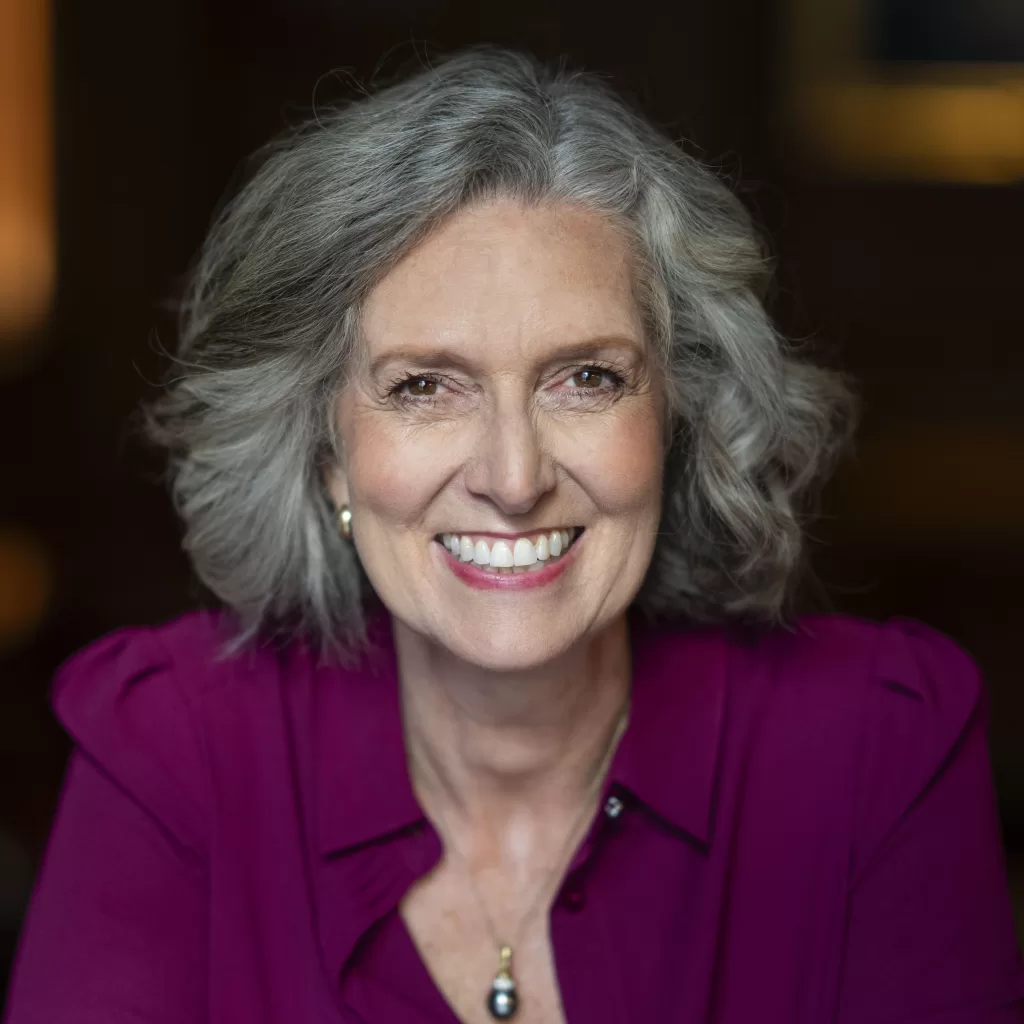

Episode 47
Penny Moyle
'From Brazil to the Boardroom: Penny Moyle on Leadership, Balance, and Finding Joy at Work'
In this insightful and deeply human episode of The Secret Resume, psychologist, former CEO, and executive coach Penny Moyle reflects on the lessons that shaped her: from moving alone to Brazil at 18 to leading one of the UK’s most respected psychology consultancies, OPP (now the Myers Briggs Company).
Penny shares honest stories about juggling motherhood with academia (including breastfeeding while typing), navigating mergers and acquisitions, and learning how to build a career on her own terms.
She opens up about what she’s learned through decades of leadership, from managing change and supporting teams through uncertainty, to choosing joy and meaning in later life.
You’ll hear:
- What living in Brazil taught Penny about courage, independence and not always being a good girl
The reality of combining career and childcare in academia
What it really means to “walk the talk” during organisational change
How she found purpose and confidence after leaving a CEO role
Why she’s not planning to retire anytime soon, and the value of choosing work and clients that bring joy
This episode is an inspiring reminder that success isn’t just about milestones, it’s about learning to enjoy the journey.
Transcript
Note that this transcript is automatically generated and we cannot guarantee 100% accuracy.
Penny Moyle [00:00:00]:
During the pandemic, I was so pleased not to be in charge, not to be having to make the horrible decision that one has to make in an economic downturn about who’s and who goes and how do you tell people, how do you keep the people who are going to survive the guilt get choosier about who I work with. So that’s really the goal for me, is to pick my client’s care for being the work I do so that I can have lots of fantastic days in the growth of the company. We acquired a couple of companies. Merger and integration took me into what I’d done in my doctoral studies. I said, well, if you’re going to do organisational change, these are the sorts of things you should do. So it really forced me to walk the talk.
Melody Moore [00:00:45]:
Welcome to the Secret Resume. I’m Melody Moore, leadership consultant, coach and endlessly curious human. For over 20 years, I’ve been helping leaders unlock potential in themselves, their teams and their organisations. Before we dive in, do you want to know how entrepreneurial your leadership really is? Why not try my Entrepreneurial Leadership Diagnostic? It takes just 10 minutes and gives you instant insights to grow your impact. You’ll find the link in the show notes. My guest today is Penny Moyle. Penny, I’m so delighted to have you here. We were just talking about when we last saw each other long we’ve known each other, but can you introduce yourself, please?
Penny Moyle [00:01:28]:
Hi, so I. I’m Penny Moyle, a business psychologist and executive coach and I’ve known Melody for a very long time. We thought initially it might have been 20 years since we last saw each other, having known each other for a few years before that. But we narrowed it down that maybe we saw each other 10 years ago, but we’ve had sort of parallel, vaguely in touch lives, which has been lovely.
Melody Moore [00:01:53]:
Fabulous and let’s go, let’s dive straight back. We’ve got loads to talk about. You’ve got some, I think, really interesting people, places and experiences that you’re going to talk about. So we’re going to go back. I love this. We’re going to go back to Brazil.
Penny Moyle [00:02:14]:
If you can probably tell, you know, but people can tell from my accent is I started life in Australia and in fact didn’t leave Australia until I was 18 and the first time I left Australia was to go to Brazil for a year as an exchange student and not able to speak any Portuguese. So I landed in a very foreign country to me, a country I knew very little about. I didn’t speak the language, I had My first week or two with a family who spoke English but were resolutely trying to help me learn minimum amounts of Portuguese to get by. And I then moved to a family where they really didn’t speak English. And I moved around three different families across the year. But it was a bit of a baptism of fire of how to be independent and I just learned a huge amount. I did eventually learn to speak Portuguese to a decent level, but those first few months were so weird and lonely. Also, cast your mind back to 1984, which I know is.
Penny Moyle [00:03:20]:
It, like, makes you very childlike, but, you know, making a phone call cost what seemed like a gazillion dollars a minute.
Melody Moore [00:03:29]:
Yes.
Penny Moyle [00:03:30]:
So I couldn’t call home frequently. Letters took two weeks to get from Brazil to Australia and then another two weeks before you get an answer. So we had this asynchronous letter writing thing. Anyway, it set me in good stead because other experiences I’ve had since have not been as hard. I could get through that all by myself at 18, when I really knew nothing, you know, whatever life throws at me, since I’ve always had more people around me, I’ve obviously learned more as I’ve gone on, but I’ve always had a decent amount of social support and networks and stuff, rather than being so totally isolated.
Melody Moore [00:04:13]:
So why Brazil?
Penny Moyle [00:04:15]:
So I was part of Rotary International’s exchange programme and it’s not a particularly big thing in the uk, but it is in nearly every other country of the world where you apply for the exchange scholarship and then they tell you where they’ve placed you and you have the option to say no, but it’s sort of hard to, because it’s a prestigious and exciting thing and you’ve sort of invested, but when you apply, you say where you would like to go. So I was, you know, in the heat of Australia and I thought, oh, Scandinavia looks good. They seem to be really cool people. And it snows and I’ve never seen snow and I just thought that that’s where I want to go. And then the letter comes back saying, congratulations, you’re going to the middle of Brazil. And I went, oh, where’s? And. And I remember my dad counselling me as I was having that sort of teenage hissy fit about it. And dad counselled me that, you know, if you want to go to Scandinavia, you will get there at some other point in your life, but because you’ve never heard of Brazil, because you know nothing about it, actually, this is an amazing opportunity to do something you wouldn’t have otherwise thought of.
Melody Moore [00:05:28]:
And were you studying whilst you were there?
Penny Moyle [00:05:31]:
So in theory, I was repeating the last year of high school, so I’d finished school. But the idea was that you went and did the last year of high school, so you were studying with people who are more or less your age, but you didn’t have to get any grades, didn’t have to do anything important. Of course, for the first many months I sat in the classroom and understood very, very little and then I started understanding more and I was just a bit bored because it wasn’t stuff I wasn’t really learning terribly much. I was just learning how to translate, you know, chemical names from English into Portuguese.
Melody Moore [00:06:07]:
A useful life skill.
Penny Moyle [00:06:10]:
Anyway, one day I went home to my host family and they asked how school was and I went, everyone’s a bit dull. And I said, yeah, why do you go every day? And I said conscientiously, because that’s the rules of the scheme is I’m meant to go to school. And I went, who would know you? They said, we don’t care. So I stopped going to school, except for on Fridays, because then you could organise your social life for the weekend.
Melody Moore [00:06:39]:
So you got your priorities right.
Penny Moyle [00:06:41]:
Well, it was an amazing. So my second half of the year was the most unconscientious of my life that I didn’t go to school, I had no responsibilities. I got an amazing suntan because it was before I really understood about skin care, cancer and. And I. Yeah, and I ate a lot. I put on a huge amount of weight. But it was. Yeah, it was an amazing period of realising that I actually could break the rules and the world didn’t fall in around my ears and that was a complete news to me.
Melody Moore [00:07:17]:
And did that. Has that belief stuck with you or was it a momentary.
Penny Moyle [00:07:26]:
Freedom? So it was just a momentary thing. I have reminded myself every so often that I actually can walk on the grass and it will be okay. I will talk about personality more in a minute. Part of my core that I really am quite. If there’s a rule, I mostly stick to them. I’m a bit dull that way.
Melody Moore [00:07:52]:
Same. And what strikes me about that is how brave it is to just go and, you know, at 18 years old, just to go and decide to go and live in a foreign country for a year.
Penny Moyle [00:08:11]:
Yeah, My grandfather used to say it was brave or the other thing.
Melody Moore [00:08:20]:
And.
Penny Moyle [00:08:20]:
I’m not sure it was foolish, which was his other thing, but it was certainly because it was part of a programme and we at my school had had exchange Students, like, come the other way around. It seemed very safe and I assumed it would be very. Like it was when we were receiving exchange students. What I hadn’t understood was cultural differences, which was, yeah, in. In Australia, no host family would have said, don’t go to school. What are you going for if you don’t enjoy it? They’d have said, no, that’s your deal. Off you go. In Brazil, Yeah.
Penny Moyle [00:08:56]:
Culturally, it was like, why, why would you bother? The other funny cultural thing is that I was. So I turned 18 the year I was there and many people thought that was sort of the ripe age for marriage. So they kind of thought that the reason I might have been there was to look for a husband.
Melody Moore [00:09:15]:
Oh.
Penny Moyle [00:09:17]:
Could not have been further from the truth. But again, just like that hadn’t crossed my mind. I’ve not even had a steady boyfriend at that point in my life.
Melody Moore [00:09:29]:
And they were trying to marry. Were they trying to line you up with suitable young men?
Penny Moyle [00:09:33]:
Well, and there were. I was in a town that no one would have heard of in Central, Central, Southern Brazil, and they hadn’t had many exchange students. I’d had sort of one a year for maybe two a year for a few years anyway. And I kept hearing about the most successful one ever was the one who fell in love and got married and stayed. And it was like that was clearly, that was what they thought success looked like. I was seeing it a bit different, but I kind of went with somewhat uncharacteristically, successfully ended up being having a nice time day by day and not particularly trying to achieve any goals or anything. Once I’d nailed the language. The language was important to me, but out of self interest as much as anything else, I wanted to be able to communicate.
Melody Moore [00:10:26]:
And there’s no such thing as duolingo or anything like that in those days that you could just pop on an app and. Or Google Translate.
Penny Moyle [00:10:34]:
None of that. I had a lovely book called Portuguese Basicles. Just basic Portuguese for foreigners and a little pocket. You know, those little tiny Collins dictionaries. And I kind of walked around with that. This meant past, that meant future. Pointing behind or in front of me. Yeah.
Melody Moore [00:10:59]:
And I imagine if you were in, you know, some small place in central Brazil, not many people are going to speak English. It’s not like being in a tourist place where, you know, there’s. They’re going to have had more English speaking. Yeah.
Penny Moyle [00:11:13]:
I mean, people learned English at school, but if you think about in the uk, people learn French at school, but not many people fluent.
Melody Moore [00:11:21]:
No.
Penny Moyle [00:11:22]:
So There was that, there was a bit of that. But you could also imagine going out with teenagers, they didn’t want to on a Saturday night be trying to use their English, you know, crowded, noisy place. They were wanting to just hang out. One of the things that actually really helped in those early days was I managed to get a sort of a part time job. I wasn’t paid. I’m not sure if it really counts as a job, but working at a local English school so people would. People who really wanted to speak proper English went for lessons outside of school and I was allocated a class that was just a conversational class, so I didn’t have to teach them anything. They already kind of had all the actual language.
Penny Moyle [00:12:05]:
But we talked English for an hour a couple of times a week, I think. And that let me chat with people my age in my language. It also got them teaching me bits because we talk about grammar and they would teach Portuguese in return for me explaining how that worked in English or idiom and that sort of thing. So that was also quite good. And I did that for probably two or three months until I kind of could speak enough Portuguese that I wasn’t that excited about going and doing the English lessons anymore. And. But I also made some friends from that, which was also helpful.
Melody Moore [00:12:45]:
Amazing. So I’m learning things I didn’t know about you. The next bit I did know, which is you moved to Oxford.
Penny Moyle [00:12:54]:
Yeah. So between times I did go back to Australia.
Melody Moore [00:12:57]:
You didn’t just go straight from Brazil to Oxford.
Penny Moyle [00:12:59]:
So I went back to Australia, went on to uni and yeah, weirdly having said at 18 that I was not interested in getting married and all of that stuff. I then met Steve at university during our undergraduate degrees and we got married at the tender age of 22.
Melody Moore [00:13:16]:
Wow.
Penny Moyle [00:13:16]:
Where we thought we were terribly grown up and we would prove how grown up we were by getting married. Anyway, so he, and somewhat with his encouragement said, you know, look, if you want to go and study overseas, go do that. So I applied to all sorts of different places and ended up with the magic combination of a, an offer of a place and an offer of some money to come and study in Oxford. So I came over and he followed a few months later because he was finishing off some work first.
Melody Moore [00:13:49]:
So this was postgraduate coming to Oxford?
Penny Moyle [00:13:53]:
Yeah. So I did my undergraduate in Adelaide and then actually worked in Tasmania for a couple of years. Sort of the little island off the bottom of Australia, as I often describe it. That was from Australia that I was applying to these universities around the world. And again, this is sort of the ancient history stuff. No Internet. I went into the local university library and I was looking up addresses for university application processes on microfiche and then writing off, like proper letters in A4 manila folders that were going off and then, you know, the postman would bring some many weeks later back the yes or no or whatever other else it might be. What was.
Melody Moore [00:14:42]:
Why overseas were you applying to different places overseas? Were you just determined you wanted to go somewhere else?
Penny Moyle [00:14:48]:
I was determined I wanted to go somewhere else just because it seemed like a good idea. Australians have certainly had at that point. I think Australians have matured a bit since, but they had a sort of exaggerated view of international expertise and I thought, well, if I just try and be homegrown, I’m never going to be successful here. I need to go and get myself an international qualification, degree, experience and then I’ll come back and I’ll be one of those international experts. Haven’t yet managed the going back.
Melody Moore [00:15:18]:
Yeah.
Penny Moyle [00:15:20]:
So, yes, I was applying to lots of different universities, lots of different scholarships, so kind of a bit of a shotgun approach. But, you know, I applied for universities on the basis that if I’d heard of them, they were probably quite big and good. Not. I just didn’t do thorough research. But as I say, I was really fortunate. I got this magic combination of money to live off and a place in Oxford. Came to Oxford thinking it would be for three years and we’d move on and. And that Steve would get to choose where we moved on to.
Penny Moyle [00:15:54]:
Steve chose that we would stay in Oxford another three years while he did his doctoral studies. And then by the time he finished his. I was settled working and I didn’t really want to move and we had kids by then and it all got. Life got complicated and now life is simple again. But we’re still in Oxford because we kind of fell in love with the place and the world comes and visits us here, which is great, and it’s close enough to fly to other parts of the world, whereas, as you will appreciate, our time in Tasmania was beautiful. But it is so far to get to anywhere else. And I think that’s part of what has kept us in Oxford is it’s close enough to, you know, pop across to the us. It’s very easy to go to, you know, European cities just for a weekend.
Penny Moyle [00:16:43]:
Yeah, I’ll do that in Australia.
Melody Moore [00:16:45]:
No, all the Australians that I’ve worked with, which there’s been many, always seem to be flying off, particularly if they’re. They know they’re only here for a few years. They’re constantly going off to Europe, you know, like you say, just for the weekend. Because that proximity is, is just wild to them that you can go, you know, for. Jump on a plane for an hour and go somewhere where the culture’s so different and the language is different and.
Penny Moyle [00:17:13]:
Yeah, and how exotic does it sound like? Oh, well, I just went to Paris for the night. It sounds particularly exotic if you live in Australia. It sounds less exotic to us here.
Melody Moore [00:17:25]:
Yes. Yeah. It’s when you end up going to somewhere for a one hour meeting that you realise. I mean, I don’t think that happens these days post pandemic, but pre pandemic I have definitely flown to another country just for a meeting and then come back.
Penny Moyle [00:17:40]:
Yeah, no, no, I think it’s that less of that happens anyway. But I find Oxford just a fabulous place to live. So I’ve been here 30 something years, having said I would come for three.
Melody Moore [00:17:54]:
And what were you studying then?
Penny Moyle [00:17:57]:
Right. So I came here to do my doctoral studies. So I’d done psychology eventually at uni in Adelaide. I actually didn’t know that I was going to do psychology when I started. I did what Americans would call a liberal arts degree. So I picked and mixed different subjects as appealed to me as I was figuring out what I wanted, but ended up with a psychology major and then got married almost immediately after my final exams. And then we moved to Tasmania and from Tasmania I was kind of using that to kind of figure out what my next move would be. And I worked for the Tasmanian Department of Health who were restructured while I was working there.
Penny Moyle [00:18:37]:
And I saw the stress and strains that the restructuring process caused for everybody. And it was being kind of, of course overseen by management consultants who turned out to have trainings in engineering rather than anything to do with people. And I thought, aha, this is psychology could do this better, this is what I want to study. And you couldn’t. There wasn’t any sort of occupational psychology courses in Australia at that time. It is a long time ago. So I thought this is perfect. I wanted to leave Australia to go and develop some expertise.
Penny Moyle [00:19:15]:
I now know what expertise I want to develop and that was sort of set me off writing to all these universities around the world. So my doctoral thesis was on the God. I can’t remember quite the title, but basically how individual differences, personality and the work environment come together during times of organisational change, either to create stress and strain or to create kind of challenge and growth. I think the word psychosocial appears somewhere in the job title, but it’s not very useful for most people. And so like much psychology research that helped me demonstrate things that will sound very obvious, like if you have control and autonomy in times of change, you will manage it much better and more productively. But the really big thing is if you work for a manager who you find to be supportive, who has your back, who you see as being competent, who you know looks after you, then again, you can manage all kinds of walking on hot coals if you need to. If your manager is the opposite of that, it wouldn’t matter whether there was times of change or not, you’d be having a horrible time. So that kind of naturally progressed into going into consulting in that kind of space.
Melody Moore [00:20:42]:
And when you were doing, as you said, you, you got married young, you had your children quite young then. So you had your children whilst doing postdoc. So after the doctorate.
Penny Moyle [00:20:56]:
Yes, yes, I finished the doctorate, I think. Yeah, I was offered the postdoc and we use that as a trigger for let’s try and have a baby as you do. Seemed logical at the time. So Alice came along just before I finished my thesis. I was hoping it was going to be just after and it wasn’t that she came early. It’s just finishing a thesis often takes just that little bit longer than you think it’s going to. So I entered this postdoc with child and so she came in year one of the three year postdoc and then Max came in year three of a three year postdoc. And by professional woman, modern standards, I was quite young, but I was 29 when I was not that young.
Penny Moyle [00:21:45]:
Yeah, I’ve been married quite a while by then and yeah, I felt that was a kind of a reasonable age.
Melody Moore [00:21:52]:
To start my family and explain to me and I’m sure others, I don’t really know what you do in a postdoc. Is it more research? Like how does it work? What are you, you know, what are you doing? That sounds terrible, I’m sorry.
Penny Moyle [00:22:11]:
Yeah. So mostly it’s not just an excuse to have a couple of babies. Mostly what people do in a postdoc is that it allows them to continue their research, to publish often what they’ve done in their doctoral research and to kick off more research and basically to set themselves up to apply for academic careers. So if you think of, you know, the other route into an academic career probably is to do lecturing and teaching postdocs let you have, I think the more for me, more exciting piece of Getting on with your research. And as you probably are aware, most academics are really love their research and also do some teaching. I think that’s possibly changing a bit these days. But yeah, so it let me do that. So I.
Penny Moyle [00:23:01]:
And I did also publish some papers and do the sorts of things postdocs are supposed to do. I didn’t spend the whole time playing with babies, but I did. Yeah. In a miscalculation of how life works. I hadn’t organised childcare when the first baby came along thinking, it’s a baby, we’ll just sit in the corner while I keep working.
Melody Moore [00:23:24]:
I’m sure you’re not the first person to have thought that.
Penny Moyle [00:23:27]:
And. And then by the time I’d realised that wasn’t going to be a long term or a medium term plan, of course the nursery was booked up and I. So we did do that for a while and I literally took Alice into the office with me while I was continuing doing my research and things. So I was lucky that I was doing a. A role that had such loose requirements of me that I could be babysitting simultaneously with working. And I’m just hesitating whether I say I worked out the technique for breastfeeding whilst typing. Lying on the.
Melody Moore [00:24:09]:
On the desk.
Penny Moyle [00:24:10]:
On the desk, keyboard out in front. We were both happy when that was happening. Yeah.
Melody Moore [00:24:17]:
That’s like an essential life skill.
Penny Moyle [00:24:21]:
Depending on what your life is like. It certainly at the time, anyway, I was much more organised by the time child number two came along and Max went into nursery very young rather than being with me quite so much.
Melody Moore [00:24:34]:
And did they have nursery on campus?
Penny Moyle [00:24:38]:
Well, Oxford isn’t really.
Melody Moore [00:24:39]:
Oh, it’s no campus. No. It’s basically the whole of Oxford, isn’t it?
Penny Moyle [00:24:44]:
There was a university nursery which was absolutely brilliant and it was full of people like us, I. E. People kind of at our kind of career stage that went with age. But also basically foreign people who didn’t have other family around to help. And that made them our de facto family for that period. And we’re still in touch with some of those people. Yeah. But it was a very.
Penny Moyle [00:25:12]:
It was quite an intense time having the kids. But also within the nursery they were, as I say, my de facto family but they were slightly across town. So it was a drop off in the morning, pick up in the evening. It wasn’t, you know, I’ll just pop down and see how the kids are doing in my coffee break.
Melody Moore [00:25:30]:
This would be a good thing.
Penny Moyle [00:25:33]:
I’ve heard that some places do that where they’ve Got a nursery in the same building, but yeah, it’s all spread out in Oxford.
Melody Moore [00:25:40]:
And were you thinking at that time academia was the life for you? Were you planning on continuing?
Penny Moyle [00:25:50]:
No, I kind of. I was still on the plan I had when I left Tasmania, which was, I’m going to get some expertise and go out into the world. I wasn’t necessarily thinking about going back to Australia by then. We, for a long time just said, oh, we’ll go back in two or three years. And that just sort of went on a rolling thing. But I was definitely not thinking to stay in academia. I was definitely thinking, I’ll go out and I’ll actually, you know, apply some of this stuff, help managers be better managers, so that when organisations restructure or change or merge and all of that stuff, that I can help them do a better job of that. That was, that was my direction of travel.
Melody Moore [00:26:29]:
And how did you find juggling your postdoc with having a family?
Penny Moyle [00:26:35]:
The postdoc was easy to juggle. I mean, aside from a few crusty old men who were a bit disapproving about me bringing the babies into the college, you know, I, I got. Also got a lot of support from some, some different people within the college who went, do what you like, don’t listen to them. I’ve got a lot of protection. I was very lucky. I mean, again, it just sounds so ancient history, but, you know, it was unusual for postdocs to get pregnant, much less to bring the baby. And, yeah, I got away with it. They like, they got a highchair so I could take Alice into the dining hall.
Penny Moyle [00:27:18]:
But, yeah, not everyone approved and there weren’t many other women around at all. I intake in that college as a doctoral student. There were 25 of us, five women. Now women make up the majority at that level, so that’s how much things have changed in a. Of a generation. But, yeah, but juggling the postdoc wasn’t that hard because I just did less work than I might have done had I not had the babies. But I, I did enough to like, look respectable.
Melody Moore [00:27:54]:
You had flexible working probably before flexible working was called flexible work.
Penny Moyle [00:28:00]:
Yeah, yeah, exactly. You know, I did. No one was clocking me in or clocking me out. And in fact, I technically didn’t take maternity le leave the second time round. Well, there’s a long story behind that that I won’t go into, but it was because the head of my college said, why are you taking maternity leave? It just means we’ll pay you less and no One needs you to be here any hours or anything, so just don’t. So that’s how I had really. I was treated really nicely in many, many ways and made it easy and it was quite family like in the college. It’s a small college which I think also helped.
Melody Moore [00:28:41]:
Do you think if you were trying to do that now, it would be different? I don’t mean you as now, I mean, you know, as someone equivalent to you.
Penny Moyle [00:28:51]:
I think in that college it would be different but better having kind of. I’m still sort of in touch with people there. I think they are still and even more generous and set up to enable. They actually have better maternity leave arrangements now than they did back then. So back then, me taking maternity leave within a three year postdoc just meant I got paid less for part of the three years. Now if you want to take maternity leave, they just extend your time. So, you know, so the conditions are actually better. And I believe that babies coming in and out of college just no one even raises an eyebrow now.
Penny Moyle [00:29:32]:
So I think that has improved. I’m not sure that’s true everywhere.
Melody Moore [00:29:35]:
But you were a trailblazer.
Penny Moyle [00:29:38]:
I was a pioneer. No, I went to a dinner there a few years ago now where I was telling you were the one. I did feel very proud and I then my next call with my daughter, I said I wasn’t the one, darling, you were the one because she was the baby.
Melody Moore [00:29:58]:
She was the college baby.
Penny Moyle [00:30:00]:
She was the baby that was wheeled in and carried around and passed the parcel around the jc. How.
Melody Moore [00:30:09]:
So did you go from there into consulting then when you finished your postdoc? Is that when that happened?
Penny Moyle [00:30:16]:
Yes, I think I did a little bit of consulting actually in the third year of my postdoc whilst pregnant with the second child. So you really didn’t focus so hard on the first doctor. Hope no one important is listening to that. So I did a little bit of consulting that year with a view to. That was what I wanted to get into. So I worked for a very small consultancy, also Oxford based, and that gave me a taste for what that could look like. And then when my postdoc three years finished, I just naturally went into working for that same consultancy for another 18 months or so.
Melody Moore [00:30:56]:
Okay, so how did you end up at opp? As was.
Penny Moyle [00:31:02]:
As was when I was working for this small consultancy called ocg. So who’s standing for Oxford in both cases they used the tools that OPP used to Sellers, Briggs, firo, CPI were their kind of standard tools. Psychometric toolkit which will mean something to other psychologists, but we’ll leave that to one side for now. So in working with them, I learned to use those tools. I went and got trained with opp, as you would, and met, therefore, several of the consultants at OPP at the time, and so started getting to know the company a bit, and that was very pleasant. And actually, then after I’d been with this smaller company for a while, one of the consultants at opp, as was said to me, you know, would you be interested in coming and working with us? And so then I made that shift from small consultancy to a bigger entity that also published the psychological tests. So that was the move. Yeah.
Melody Moore [00:32:15]:
And you were there for quite some time, really.
Penny Moyle [00:32:20]:
18 years in the end, was it?
Melody Moore [00:32:22]:
Goodness.
Penny Moyle [00:32:23]:
Yeah. So that’s. I think of that as the big chunk of my career.
Melody Moore [00:32:27]:
And that’s where we met. So I worked at opp. OPP is now the Myers Briggs Company.
Penny Moyle [00:32:33]:
I think it’s called part of the Myers Briggs Company.
Melody Moore [00:32:36]:
Yes. Yes. So, but that’s where we met when I was a. My first ever consulting job was at opp.
Penny Moyle [00:32:45]:
Yeah. So it was my second consulting job when I moved to opp, but I got there a few years before you.
Melody Moore [00:32:51]:
Yes, but quite common, I think, wasn’t it? Because it’s. To me, it’s that great size of consultancy where it’s big enough that, you know, it’s not just one person and their dog. So you will. You. There’s, you know, you’ve got some interesting clients and you’re doing interesting things, but it’s the kind of place that lots of people went for their first consulting job. And. And I think it was really great in that sense of getting really good experience.
Penny Moyle [00:33:24]:
Yeah. And I. I think in its heyday, which includes the time that you were there, I felt that we had an amazing setup where we would. We had. We, as a company had a great reputation, which meant we got the best and brightest graduates. Then we were able to give those people great opportunities and experience. And what was a little sad was we weren’t big enough to necessarily hold on to people for a small career.
Melody Moore [00:33:52]:
Yeah.
Penny Moyle [00:33:52]:
So there was that slight sadness that, you know, after five years or so, people quite often would move on.
Melody Moore [00:33:59]:
Yeah, I was there five years.
Penny Moyle [00:34:01]:
So you were very much that heyday model. But actually what that means is out in the world still, there are this amazing alumni from that. From that era, from that company as it was.
Melody Moore [00:34:18]:
Yes.
Penny Moyle [00:34:20]:
And, you know, and as you know, we’re all vaguely in touch with each other, even if not Regularly seeing each other. Yeah. Before this call we were doing a catch up on, you know, some of our former colleagues. Yeah. And. Yeah, and it’s. And it’s lovely. And people have gone on to do amazing things.
Penny Moyle [00:34:37]:
Some, many. And in doing as you and I now are kind of working fairly independently but often via having worked in various other places along the way.
Melody Moore [00:34:47]:
Yes.
Penny Moyle [00:34:48]:
But I love that kind of connectedness that we still have and largely everyone has quite a fondness for their time.
Melody Moore [00:34:56]:
Definitely, definitely. And I think what was, for me what was interesting was it had big. It actually had a very big product business, didn’t it? So a lot of the time you weren’t just doing consulting, you were actually training people to use psychometrics.
Penny Moyle [00:35:13]:
Yeah.
Melody Moore [00:35:14]:
And there’s a skill set that comes with that in terms of, you know. And I think training and facilitation are two different things. But it gave you that confidence to stand up on your feet in front of, you know, quite large groups of people. And certainly when I was there we were training a lot of people in MVTI in particular, but it gave you that repetition is what I’m trying to say. So repetition of the same activities. And I think what I’ve seen subsequent that is lots of people really being averse to repetition. So they’ll do something once or twice and then they’ll want to go off and do something more interesting listening to them. But there’s something about building your muscles as a consultant where we were doing lots of the same kind of thing over and over and it, it really built your skills.
Penny Moyle [00:36:09]:
Absolutely. I was just going through my head. Is it Malcolm Gladwell who talks about 10,000 hours? Yeah, stuff. And I’m not sure we quite did 10000 hours. And there’s some weeks it felt like it.
Melody Moore [00:36:22]:
Yeah.
Penny Moyle [00:36:22]:
You learn so much, much by training and, and the repetition, because it was never in anticipation. I thought repetition would be repetitive doing it. I realised that each new week.
Melody Moore [00:36:35]:
Yes.
Penny Moyle [00:36:35]:
That you did the same course, you were actually doing a completely different course because it was a different bunch of people you were working with.
Melody Moore [00:36:42]:
Yes.
Penny Moyle [00:36:43]:
And that’s not repetitive. And you do develop your muscle. You do the other thing. That was lovely. Particularly for the Myers Briggs trainings we used to co facilitate. You would learn stuff from the other facilitator and we often had some of the really great authors of some of the resources come through and the privilege of working with them. I just learned enormous amounts about the tools actually also about life. But yeah, the training, the training side of it was always A bit of the sort of poor cousin.
Penny Moyle [00:37:16]:
It was wonderful, I think, learning for us, certainly to a point. And it was great, great commercially for the company because in training people you were converting people to become ongoing customers for the product. Yeah. And. And sometimes actually connections that lasted later because doing what I’m doing now actually relates back to somebody I had on a training course in my fairly early days, otp. But we stay connected. So the next you get out of doing that kind of thing.
Melody Moore [00:37:51]:
Oh, hugely. When I. I moved to hey Group and it turned out I trained the MD at the time and a few other hey Group colleagues knew me because I had trained them and I would, I would meet people at the airport, like random people would come up to me and go, you trained me in mbti. I’m like, did I?
Penny Moyle [00:38:09]:
Yeah, absolutely, absolutely. Could you work out when you’ve done a lot of searching? Must have trained hundreds and hundreds of people. Yeah, kind of. Yeah. And of course they’ve been staring at you for however many days and you’re the sea of faces.
Melody Moore [00:38:23]:
Yes.
Penny Moyle [00:38:24]:
So there’s actually that they remember you and you remember you. Yeah, quite sure.
Melody Moore [00:38:30]:
Do you know, one thing as well that I always think of is because you used to get feedback forms all the time.
Penny Moyle [00:38:36]:
Yeah.
Melody Moore [00:38:37]:
It kind of toughened you up to that as well. Like it was. It made you or it made me really able to and happy to get that feedback. It kind of didn’t bother me. It was useful often. But I know some people are very sensitive to. To, you know, getting constant feedback. But it’s a weird job where you.
Melody Moore [00:38:58]:
Every single week, pretty much people were writing stuff about you and you, you, you know, you read it. It’s an unusual situation and sometimes really.
Penny Moyle [00:39:08]:
Quite personal stuff wasn’t quite what you were asking for. I think you probably bit tougher than me. I remember finding that really, really hard. But again, one of the saving graces was you were quite often co facilitating so you could sit down with somebody else and read all that feedback together and kind of navigate which parts of it were important to pay attention to and which parts of it was about someone else was having a bad week and. And probably not so much about your.
Melody Moore [00:39:37]:
Someone once told me my hair was irritating, that kind of thing. But actually it was quite. I don’t know, I thought, well, I was maybe I had my hair down and it was very long at the time and I was probably flipping it about and it probably was quite irritating.
Penny Moyle [00:39:52]:
It said decided so. But if I thought your hair was irritating, I think had a fit with mine, which was even longer and more billowy at the time. But, yeah, no, that. That feedback process really was part of it and, you know, work that I do now, you know, we often talk about giving and receiving feedback. It’s just not enough of it in the world and people just leave things unsaid and of course that doesn’t help. So I think you’re right. There was something about having had to face that then, even when it was brutal.
Melody Moore [00:40:28]:
Yes.
Penny Moyle [00:40:28]:
That, you know, you got into a habit, developing a muscle again.
Melody Moore [00:40:34]:
Yeah. Well, also, we learned to. To give feedback as well, because, of course, you were constantly giving the participants on the programme feedback about how they were doing in their feedback. So, you know, from. From very early days, you learn how to gives, I think, clear feedback with kindness.
Penny Moyle [00:40:55]:
Exactly. That radical candour piece. So that book hadn’t been written at that. No, but it was also. And the motivation to do that really well, not just because you wanted to do a good job, but also because you knew that a day later they were going to fill out a feedback form.
Melody Moore [00:41:10]:
Yeah, yeah, that’s true.
Penny Moyle [00:41:12]:
If you could get it right where you were, being kind and insightful and helpful, then they were likely to value that and then they would give you nice feedback too. Whereas if you, you know, just told them that they were wonderful and they knew they’d made mistakes and they’ll come back thinking, well, she didn’t add any value.
Melody Moore [00:41:34]:
Yeah.
Penny Moyle [00:41:35]:
If you said anything too brutal, they’d.
Melody Moore [00:41:37]:
Just say, yeah, she was horrible and.
Penny Moyle [00:41:41]:
I don’t like her hair and that. Jack. Yeah, the comments about clothing were amazing.
Melody Moore [00:41:47]:
Yeah, there was a lot of comments about clothing. It’s interesting. So you kind of rose through the ranks at opp, and what role were you in at the end of your time at opp?
Penny Moyle [00:42:02]:
Yeah, I sort of ran out of roles, so I spent my last five years there as CEO, having worked around training, consultancy, R and D, sales, marketing. I think that’s probably all of them. Yeah. So I sort of did lots of different roles and the company grew as I was kind of growing well, which was. I was very, very fortunate that that just all happened to coincide. So I didn’t do my five years and move on. I did my five years and just moved up and around.
Melody Moore [00:42:32]:
And another five. And another five. Yes, well.
Penny Moyle [00:42:34]:
And it let me stay, living in Oxford and, you know, when my kids went through school and that was all, you know, a very nice match. And during the. Yeah, the latter half, I guess, in the growth of the company, we acquired a couple of companies. So getting to that merger and integration took me into what I’d done in my doctoral studies. I said, well, if you’re going to do organisational change, these are the sorts of things you should do. So. So it really forced me to walk the talk. As a manager, I had to do all the things I’ve been telling managers.
Melody Moore [00:43:14]:
You had to actually live it.
Penny Moyle [00:43:15]:
Not sure I did all of them perfectly. I’m sure I didn’t do all of them perfectly, but at least it was great experience. And I think we did a lot of things really well in that merger and integration phase. But then in the latter years, the founder of the company decided that they wanted to sell. So I got to do the disposal, as they call it, of the company, the selling of the asset.
Melody Moore [00:43:44]:
That sounds awful.
Penny Moyle [00:43:44]:
The disposal, they’re saying, which we had to do in two halves. So having carefully integrated these different companies, we then segregated them back out into two entities and sold them in two halves. So that was fascinating. Bit of sort of business experience, sort of. I can grandly say, you know, I did some M and A work, but.
Melody Moore [00:44:11]:
It was D, M and A.
Penny Moyle [00:44:14]:
We did the M and A bit and then we. Then we did the other side of the coin of pulling them apart and selling them off separately, which was an amazing time. Incredibly hard work. Learned an enormous amount, as I sure didn’t get it right every time. But what was really interesting to me is that after we sold the second half, I then no longer had a job with the company, and that had been slightly unexpected to me and I, you know, had a bit of a rough time. What was really lovely was how many of my former colleagues, many of whom I thought probably didn’t even like me, got in touch, reached out, helped me actually establish myself in. In what’s now my kind of later career. That.
Penny Moyle [00:45:04]:
Yeah. And you say that. Just an amazing alumni of that place.
Melody Moore [00:45:08]:
Yeah. So what made you decide to go it alone rather than going and working in another organisation?
Penny Moyle [00:45:17]:
Yeah, it wasn’t really. Well, when I first left opp, what I wanted to do was to go and have another executive role. I thought, I’ve learned so much in this period of this. I’ll call it the M and A period, but all of that stuff, I want to go and apply that somewhere else because I think I can do it better if I do it again. And I really looked for another executive role after a period of garden leave, which maybe that helped me lose my stride, I don’t know. Anyway, I went looking for another executive role and Couldn’t quite find the one that would work for me or that I looked like I would be right for them. It just wasn’t quite a match. And people kept saying, oh, no, what you’ll do, Penny, is you’ll just go and be an independent coach.
Penny Moyle [00:46:03]:
And I was like, no, no, no, no, I’ll do that, like in 10 years time. That, that feels right. But I think I’ve got another big job in me and I want to go and give that a go. And then the job that came up was a half time job setting up a charity called Race Against Dementia with Sir Jackie Stewart, who’s a Formula one champion. And that was a fascinating job, but it was only half time and that meant that I started doing some coaching and stuff on the side of that. So I worked with Sir Jackie for three years getting that charity up and running and it got to a point where they really needed a full time CEO and more staff and I knew that wasn’t me. And so I kind of moved off into doing what I’m doing now. And the charity has grown and does great work if put a plug in for them, if you want to get involved in.
Melody Moore [00:47:03]:
Well, something is very close to my heart because my dad has to rent.
Penny Moyle [00:47:06]:
So it’s right. Yeah, great charity. And I, through having done that job, I’ve got very interested in it and Touchwood haven’t yet been very closely affected by it in my family anyway. So I’ve moved then from there. I then moved into doing more of this sort of full time coaching, coach, training piece because I realised I was enjoying it. I was enjoying it more than I thought I would, I think. I didn’t think I would enjoy it. I didn’t think I would enjoy the independence that I know a lot of people crave in going to.
Penny Moyle [00:47:43]:
So that I wasn’t looking for that, I wasn’t craving it. In fact, I thought I’d probably get quite lonely. But I’ve discovered ways and networks in which it doesn’t feel lonely and it does feel engaging and fun. And during the pandemic when I was still doing the half and half stuff, I was so pleased not to be in charge of people, not to be having to make the horrible decisions that one has to make in an economic downturn about and who goes and how do you tell people and how do you keep the people who I’ve got survive the guilt? Because I’d done a bit of that in sort of 2009. And so whilst I kind of knew I had the skills and Knew I could do it. I didn’t really want to have to do that again. And so I think that probably helped cement the idea that being independent is okay and the content of the work. And again, if I think the pandemic probably was a bit of a turning point for me, as I’m sure it was for many people, is the content of being able to help people doing those really hard roles where you have to decide who stays and who goes and what we’re going to do.
Penny Moyle [00:48:58]:
Being able to help and support those people feels so satisfying that I thought, why? Why would I want to do anything else?
Melody Moore [00:49:09]:
And so your episode is part of my Coaches and Therapists series. My dog’s just jumped up at me and I’m really curious. A couple of things. One is around you and I both have a very strong background in diagnostics, personality questionnaires. How much do you use that now in your coaching?
Penny Moyle [00:49:34]:
Yeah, a bit, I would say. So whenever I do coaching, I always start with a chemistry meeting and I kind of great thing there. And in the chemistry meeting, I will talk to people about their previous experience of coaching and find out what they’re hoping to get out of coaching this time around. And so that will help me develop a bit of an idea of would assessment be helpful to this person? And I will also ask them, have they done personality assessments before and what do they think of them and are they curious? And I kind of all of that goes together to decide are we going to do some personality assessments? So sometimes they will say, no, no, I’ve done lots of assessments here. Here’s my folder. Can you help me? Sometimes I say I’ve never done any. And that sounds really interesting if I’ll select a couple that I think might be most relevant for them. But I’m really flexible around that.
Penny Moyle [00:50:33]:
Whereas in my early days, which were similar to your early days, you know, the sort of things, the sort of coaching we did was typically on back of a really thorough assessment and we would give people a battery of assessments and I did often feel we were battering them. And sometimes also those what they call development centres where you get people exercises and you watch them and you take notes about them and then you kind of give them this mega report that is meant to, and I think did balance positives and development points, but always what they would hear is here are your weaknesses and what are you going to do to fix them. And then off the back of that we might do some coaching to help them create a development plan or an action plan off that so you know, having done a lot of that it was really interesting to do my proper coaching qualification and to be challenged by my tutor in that to say try doing some coaching with none of it. Take away your guardrails and see how far you can get. And realising that actually you don’t need to have all of that stuff. It can sometimes be helpful and can sometimes be absolutely the insight that makes all the difference to people. But it doesn’t have to be a compulsory piece.
Melody Moore [00:51:48]:
No. And I’m exactly the same. I hardly ever use diagnostics now and I hardly ever use competency models either. Like I just. Yeah, I think I’m just much more about the individual. Much more about the individual and what they think. Yeah.
Penny Moyle [00:52:08]:
And I often do 360s now by interview. Whereas back in the day we give people a standardised, very well validated 360 or series of 360 questionnaires to complete. And I just remember puzzling over the results of those things with people all the time. Oh I don’t know why I only got a 4.3 here where I got a 4.7 there and I go on future. No, I don’t know. Then the open ended answers would look like they were more interesting but they were often quite cryptic.
Melody Moore [00:52:44]:
Yeah.
Penny Moyle [00:52:45]:
And so I’ve given away those as well. But I can actually go and talk to people about how somebody’s showing up and what impact they’re having and what do you like about working with them and what do you think they could change to be even more effective? You get really rich useful data.
Melody Moore [00:53:00]:
Yes.
Penny Moyle [00:53:01]:
Instead of something that looks a bit scientific but is actually not helping anyone understand anything.
Melody Moore [00:53:09]:
No, I do remember one of my favourite ever 360 questions was in the 360 we used to use a lot. It was something like leaves a trail of bruised people in their wake. I just love that as a question. It’s like I love the person who invented that question. I think it’s brilliant.
Penny Moyle [00:53:31]:
Yes, I remember that question as well. Yeah.
Melody Moore [00:53:37]:
And I can think of some people who that absolutely is is true of. But yeah, that was, I guess what people like about the. The A360 often is it’s some form of a benchmark, isn’t it? So that they like to be compared to others. I personally don’t think that it’s relevant. I think it’s more about where your highest and lowest scores are personally than some random benchmark of.
Penny Moyle [00:54:07]:
Yeah and I can see why that’s attractive to some organisations is they’re Trying to get a handle on. On their talent as a collective.
Melody Moore [00:54:14]:
Yeah.
Penny Moyle [00:54:16]:
And I absolutely have sympathy for why you might want to use them in that way, but for the work I’m doing, which is very one on one about individuals, objectives they’re trying to achieve and typically with quite senior people, that style of 360 just feels so much less helpful.
Melody Moore [00:54:33]:
Yeah.
Penny Moyle [00:54:34]:
Have proper conversations with people.
Melody Moore [00:54:36]:
Yes.
Penny Moyle [00:54:38]:
So, yeah, I’ve sort of somewhat gone off assessment. I was asked recently if I would do some assessment work for a prestigious company and I went, no. I said I did a lot of that. I’ve kind of moved on.
Melody Moore [00:54:55]:
I’ve. It’s funny, I had this conversation with someone the other day and for me I’ve done a tonne of assessment too, but what I find is it almost feels like it’s. I’m being asked to judge people and I spend the whole of the rest of my time not judging people at all and trying to be supportive and helpful and it just. It’s not what I want to be doing. I don’t want to be judging people.
Penny Moyle [00:55:23]:
Yeah. Now the only time I would come at doing a sort of one of those sort of deep dive assessments would be if I was also going to be contracted to do ongoing coaching.
Melody Moore [00:55:32]:
Yes.
Penny Moyle [00:55:33]:
What I really run from now is do an assessment, write a report, walk away and there’s still a lot of that kind of work out there. It is something that organisations want to do, but I don’t want to do it myself. No.
Melody Moore [00:55:47]:
And some people are great at it, aren’t they? And they are just. That’s their real sort of skill set is that sort of evaluation. But yeah, I just, I feel like it’s so different to what I’m doing the rest of the time. I find it quite hard.
Penny Moyle [00:56:01]:
Yeah. Yeah, well. And it’s like. Well, it’s a privilege, isn’t it, that we can pick and choose what kind of work do. And that is one of the advantages of being independent.
Melody Moore [00:56:10]:
Yes.
Penny Moyle [00:56:11]:
And going, okay, yep, I’ve got plenty of work on. I don’t need to say yes to something that I’m not going to love. In a lucky position that all my clients at the moment are clients I’m enjoying working with.
Melody Moore [00:56:25]:
Very lucky. Talk to me about team coaching. Is that something you do much of?
Penny Moyle [00:56:31]:
Yeah, not as much as I would like. So that’s a bit of a plug really. But yeah, I think working with teams is. Is powerful and useful and, you know, if you can get a team working in a high performance way, then you know it pays dividends enormously. And I find it satisfying partly because you get a much deeper perspective on the context that people are working in. So sometimes you do just work with, you know, one person. Often I work with one person. They’re nearly always a member of some kind of team.
Penny Moyle [00:57:06]:
But my only insight into how that team’s working is through the eyes of that one person and that only one part of the story. Whereas when I’m working with an individual and the team, I’m getting a lot more rounded perspective. Now, it can be difficult, though, to work with a whole team as one person, particularly if you start, say, working with the CEO, and the CEO says to everyone, hey, I’ve got this coach, and we’re doing great work. And coach is going to come and work with all of you. You just watch people’s toes curl at the idea, oh, God, the boss is bringing in their person. So I try not to do that where I feel I’ve done it successfully. It’s been a couple of different models, actually. One is where I was brought in initially to do a leadership development programme with the whole team.
Penny Moyle [00:57:59]:
So everyone was kind of in a equal pegging. And then after we’d finished that programme, in fact, a year after, they said, actually, can you come and do some ongoing work with the team? So I was kind of there as an individual, sort of equally connected with all of them, and we all knew each other well enough, I think, that they could trust that when I said things were confidential and I wouldn’t be feeding them back or sideways, that. That. That really was the case. So I think that’s a model that has worked really well. In another I have worked with is where I bring in another facilitator and we work together so that we each do both individual coaching with each member of the team and we work together to work with the whole team. And that gives people a little bit more choice of, like, do I want to be coached by this one or that? And I think that can be quite useful. And it also gives me someone to say, did you see that? What do you think of that?
Melody Moore [00:59:02]:
Yes.
Penny Moyle [00:59:03]:
You don’t get. When you’re on your own.
Melody Moore [00:59:04]:
No.
Penny Moyle [00:59:05]:
See everything when you’re on your own, either.
Melody Moore [00:59:07]:
No, no. And I. I agree with you. I think with. With team dynamics, they’re so complicated.
Penny Moyle [00:59:14]:
Yeah.
Melody Moore [00:59:15]:
That it’s kind of almost impossible to hold the situation if you’re just on your own. And, you know, I just think having someone else there makes a huge difference in terms of, like you say, being able to Observe things, check what you think you’re thinking, you know, what you’re picking up against what someone else is picking up.
Penny Moyle [00:59:40]:
But that’s my kind of favoured way of doing it. But it’s of course quite expensive because you’re asking them to pay for the two of you running in parallel when only one of you might be on your feet and obviously working time. And then if you are going to have individual time with everybody as well as the collective, then that’s more hours. So a lot of clients just baulk at the cost that’s involved there. Some go for it and I think they get really good value. Yeah. But some just won’t kind of make the ROI work in their head a priori and then it stops. So, you know, you end up making various other kinds of compromises.
Penny Moyle [01:00:30]:
So you either, you know, they just say, come facilitate an off site and we’ll have you come along, you know, once every six months and then, you know, you can do some useful stuff. But it’s hard for people to get. Keep up the. Those commitments they make at the end of an off site. They really do them week on week, month on month. And if you never get to observe a team, what I call in its natural environment having a regular team meeting.
Melody Moore [01:00:55]:
Yeah.
Penny Moyle [01:00:56]:
Artificial.
Melody Moore [01:00:57]:
Yes.
Penny Moyle [01:00:58]:
But it’s. But it’s a hard sell to say I want to just sit in the corner of the room and watch you do your team meeting.
Melody Moore [01:01:04]:
Yeah.
Penny Moyle [01:01:05]:
And then I’m going to give you some observations and.
Melody Moore [01:01:07]:
Yeah.
Penny Moyle [01:01:09]:
What you might try again next week. Yes. Then I’m going to come and watch again next week. Yeah. And see how that goes again. You know, it is quite an investment on their part. So. Yeah, so I don’t do as much team coaching as I’d like to, but I do think it’s kind of, it’s a bit the way of the future.
Penny Moyle [01:01:30]:
A couple of teams I’m working with at the moment that are more of the more sporadic variety are teams where they are all completely remote to each other. Both international teams, they work across several countries. One it’s sort of an Eastern European ban and the other it’s a Latin American span. And they are very aware that for the team to work they are going to have to invest and they’re going to have to invest in some face to face time. And when they’re investing in that face to face time, it is worth bringing in a facilitator to kind of push and challenge them. And I think like one, one of those two teams in particular, I Think could well have, have a great, be a great case study role model for how to do this stuff. Because you know, what they’re trying to do as a business just needs them to have little operations in lots of countries. Yeah, of course they’re going to have people spread around.
Penny Moyle [01:02:27]:
That’s better than the alternative, than everybody’s in head office at the executive level and like everyone else, four cousins.
Melody Moore [01:02:33]:
Yeah.
Penny Moyle [01:02:34]:
So they just have to invest in a little bit of, you know, travel and time commitment time together.
Melody Moore [01:02:41]:
Penny, how much do you, you’ve obviously got great business experience and how much do you draw on that in your coaching?
Penny Moyle [01:02:52]:
It’s hard to tell because it’s so much, it’s part of me, but I think I do, I think it informs some levels of empathy that I wouldn’t have had if I hadn’t, you know, had those scars for myself. And sometimes it’s just the door opener. It’s, you know, I can say I’ve been a CEO and I’m a qualified coach and a business psychologist and people, oh, okay, that, that feels like you might know what you’re talking about. Whereas if I didn’t say I’d been a CEO, that’d be a bit more like, oh, not so sure. Which is, I think it’s a bit akin to. Many of my clients work in professional services a lot and you know, lawyers will often like to have somebody work with them who’s a lawyer. And I sort of, I still managed to work with some lawyers despite never having been a lawyer. But people in private equity like to know that, you know, you know, private equity, which I kind of do now because I’ve worked in lots of different private equity firms.
Penny Moyle [01:03:58]:
But honestly, the issues and the stuff that comes up, they’re people issues. They’re about getting along with my team, they’re about delegating, they’re about having resilience and, you know, getting enough sleep at night and not working every hour that God sends. They’re about succession planning, that, that and those things can happen just as much in the private equity, in a law firm, in a manufacturing company, in a sales based company and I work in all of those. But they all, like there’s that commonality. Of course, every person is unique and they do a particular kind of work. But these people issues, of course, you know, by virtue of having worked as a consultant for many years, by having studied psychology, by having trained as a coach, you don’t know them that differently from having been a CEO. There’s a little bit extra. Okay, there’s a little bit around sort of the empathy around having suffered some of the same sorts of things.
Penny Moyle [01:05:01]:
But you know, but the core of what I do with my professional training.
Melody Moore [01:05:06]:
Yeah, yeah, I like the. I thought that was interesting. You say it’s a door opener though, which. Yeah, you know, it’s. It. People will then assume a level of knowledge and competence because of that experience.
Penny Moyle [01:05:20]:
Yeah, but is that exactly how much of it I really use? I’m not sure, but it is just part of me now. It’s. Right, it’s hard to.
Melody Moore [01:05:30]:
Yeah, it’s hard for you to know. Yeah. Right, let’s move on to my standard questions that I ask everybody. So what is next for you?
Penny Moyle [01:05:41]:
Keeping doing what I’m doing. The one part of what I’m doing that I didn’t mention is I do coach training as well as coaching directly myself and I really enjoy both. Both things and having that mix. But I, you know, eight years now since I left OPP and I said, you know, in 10 years time this is what I expected to be doing. I’m kind of, I got here a bit earlier than I expected, but I’m where I wanted to be and it’s working much better than I thought it would.
Melody Moore [01:06:16]:
I always say that to people that we’re in that one of those few professions where actually the older that you get, the better. Like in, in so many businesses, people, you know, they get into their 50s and people write them off. Whereas I would say in coaching and, and consulting it’s the opposite.
Penny Moyle [01:06:39]:
Yeah. I think there is a. Definitely an element of truth, particularly if you want to work with senior people in a business. You know, they don’t want expect a 30 year old to be able to tell them anything. To be honest, when I was 30, I probably wouldn’t have told them anything very useful. So I probably have learned something along the way just going back to that last business experience. But yeah, but you know, I enjoy what I do and my friends from other careers at my sort of age are starting to talk retirement and I’m not really interested in retiring because I enjoy what I do and I literally have days where I end the day going, that’s been a fantastic day. I don’t have this much fun when I’m on holiday, so why would I stop that? Get choosier about who I work with.
Melody Moore [01:07:33]:
Yes, yes. Then you can have more fantastic days if you’re choosier about who you work with.
Penny Moyle [01:07:39]:
Exactly, exactly. So that’s really the goal for me is to pick my clients carefully in the work I do so that I can have lots of fantastic days. Why wouldn’t I want to have lots of fantastic days?
Melody Moore [01:07:49]:
That’s perfect. And what I’m sure you’ve read a gazillion books.
Penny Moyle [01:07:54]:
Books.
Melody Moore [01:07:54]:
But what book or books would you recommend?
Penny Moyle [01:07:58]:
Yeah. So when I saw this question coming up, I thought I should recommend one or another fabulous coaching book because there are so many. And then I kind of got frightened if I recommend one, then I’m not anyway. But a book I I read last year and loved was Lessons in Chemistry. So just a novel.
Melody Moore [01:08:20]:
Hasn’t that been made into a Netflix?
Penny Moyle [01:08:24]:
I think it might be Apple tv. Anyway, I haven’t watched it yet because people told me it wasn’t as good as the book and I loved the book so much. I don’t. Didn’t want to spoil it, but I may get around to watching it. But it is, you know, it’s that of working mum mid last century. So a bit earlier than us. But there was enough resonance there that that touched me and are probably still some lessons for life in there as well.
Melody Moore [01:08:51]:
Yeah, love that. And advice you would give to your younger self.
Penny Moyle [01:08:56]:
Yeah. Take maternity leave.
Melody Moore [01:08:59]:
Great advice.
Penny Moyle [01:09:01]:
I kind of avoided taking it by being in this wonderfully flexible postdoc role. But actually, if you can take maternity leave, take it. Enjoy being with your kids. Don’t run yourself ragged. Don’t go back to work before you have to. It doesn’t make the big difference in terms of career advancement that I imagined it was making at the time that I made that sacrifice. So that would be my really, my really big advice to younger self.
Melody Moore [01:09:30]:
That’s very wise advice. And what about a title or a strap line for your story?
Penny Moyle [01:09:37]:
So I’m going with Learning to enjoy the journey because I was very goal focused. I still have that part of my personality and we talked about us sharing that, but actually enjoying each day and making that the focus rather than thinking there’s some career ladder that I’m climbing is really nice and it’s nice to be at that stage in my life. I might have enjoyed some of the earlier stages more if I’ve been less focused on what my doing career wise and more focused on am I enjoying this? Yes, what I want to do.
Melody Moore [01:10:16]:
Yeah.
Penny Moyle [01:10:16]:
So learning to enjoy the journey.
Melody Moore [01:10:19]:
And what takeaway would you. What one thing would you want the listeners to take away?
Penny Moyle [01:10:27]:
Yeah, probably that. Checking in with yourself to see did I have a good day today? Perhaps what was good about my day today? How can I make tomorrow also good? Maybe even better and making sure you’re enjoying each one rather than thinking I’ll delay gratification for whatever’s next.
Melody Moore [01:10:48]:
I love that. Penny, thank you so much for coming on the Secret Resume. I have loved talking to you. It’s been really, really interesting.
Penny Moyle [01:10:58]:
Been really great to reconnect as well.
Melody Moore [01:11:00]:
Yeah, fabulous.
Penny Moyle [01:11:01]:
Have to do this in person sometime soon.
Melody Moore [01:11:03]:
Definitely. This podcast is brought to you by Liberare Consulting. If you enjoyed today’s episode, hit subscribe so you’re the first to hear new conversations. And if you found it valuable, do a friend a favour and share it with them too.