



Episode 43
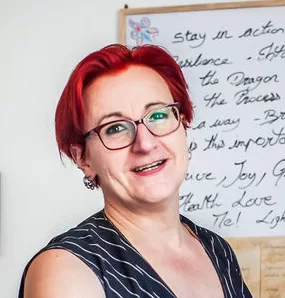
Steph Thommen
'From Call Centres to Culture Architect: Steph Thommen’s HR Journey'
What happens when a French academic-turned-call-centre-leader becomes an expert in startup culture and people operations? In this episode, Melody Moore sits down with Steph Thommen, Fractional Head of People, culture geek, and accidental entrepreneur, to explore the career pivots, personal influences, and deep values that don’t show up on her LinkedIn profile, but shape everything she does.
From her rebellious, wine-sharing aunt to building high-performing teams in tech startups, Steph shares candid insights into the messy magic of leading with humanity. Whether you’re navigating scale-up chaos, rethinking your relationship with work, or just curious about what “good HR” really looks like, this conversation will challenge, inspire, and stick with you.
Topics include:
Culture as a strategic tool (not a vibe)
Startup myths and realities
Identity, belonging, and being the “outsider within”
Why being treated like an adult at 13 shaped her leadership lens
Transcript
Note that this transcript is automatically generated and we cannot guarantee 100% accuracy.
Melody Moore [00:00:02]:
Welcome to the Secret Resume podcast. I’m Melody Moore, consultant, coach and all round curious human being. I’ve spent over 20 years helping leaders unlock potential their own, their teams and their organisations. On this podcast we dive into our guests messy magical lives to hear the stories that don’t make it onto their resume or, or their LinkedIn profile, but shape who they really are at work and in life. Before we dive in, I want to tell you about something that I’m really excited about which is our being free membership. We’re developing an online community which is designed for people who are interested in personal growth. If you’re navigating career transitions, maybe feeling stuck or burnt out or simply seeking more meaning in your life, then this is for you. Membership gives you access to a range of resources, a supportive community and monthly group coaching calls.
Melody Moore [00:01:00]:
It will allow you to explore what freedom means to you on your own terms. Head to www.liberareconsulting.co.uk being free to join the waitlist. So my guest today is Steph Thommen. Steph, welcome to the Secret Resume podcast and I wonder. You’re welcome. And I wonder if you could start by telling us just a little bit about yourself.
Steph Thommen [00:01:30]:
Yes, well, I think as we, we were saying a minute ago, as I am French originally, I’ve lived in, in Ireland for nearly eight years. I’ve now been in the UK for 24, 25, so I’ve lived abroad longer than I’ve lived in France and people often get confused about my accents, kind of where, where are you from? Because I’ve moved, moved around a little bit. I started my career in call centres. Basically I moved to Ireland because I wanted to become a lecturer in English in a French university and to do that I needed to spend some time in an English speaking country to improve my accent and I started working in call centres and decided that I didn’t want to go back to France. So I finished my degree remotely and then I stayed in Ireland and started my professional career. And as a, as a professional I did like in call centres. I did everything from agent to pretty much call centre manager and I’ve always worked in tech so I’ve worked with companies like some Microsoft, hp, Symantec, Apple, one on one. So big tech companies doing their technical support and what I really got interested in over time, and we’ll cover that a little bit later, is how do you create good teams, how do you make sure that the people you work with are happy in their job and delivering results? And as a result I’ve become a culture geek basically just kind of how, how, how do you make business work well and create a good culture? And so after, after I’ve moved, I moved to the UK about four years later I was hired by one of my clients who was a startup.
Steph Thommen [00:03:33]:
The makers of Second Life sold in the lab and that started my, my startup journey and that was in 2008. So I’ve been working with startups since then and discovering the world of startups helped my geekiness because startups operate very differently from more traditional businesses and that’s given me the opportunity to learn a lot, experiment and really deepen my knowledge on how do you build a strong team, what the science calls a high performing team. How do you do that?
Melody Moore [00:04:17]:
And let’s come back to that because I’m really interested in that, particularly in the context of startups. So we’ll come back to that because I think it’s a very interesting area.
Steph Thommen [00:04:27]:
Yeah.
Melody Moore [00:04:27]:
And you work now as a fractional HR, is that what you call yourself?
Steph Thommen [00:04:33]:
Yeah, a fractional people operation for fractional head of people. It depends. I, I’m not very attached to the, to the title. What I do for startups is I take the burden of people operations and HR away so that they can really focus on the business. And I either do that for founders because founders like when the companies are still at early stages, they can’t really afford a full HR person. So I step in and work with them 1, 2 day weeks helping them set up all of the foundations they need to actually build that high performing culture right from the beginning. Or I help HR people within usually larger startups and I take the burden of the day to day operation so that they can focus on establishing the culture that they want and work at a strategic level rather than being bogged down with the day to day management of DHR function.
Melody Moore [00:05:38]:
Okay, great. Well we’ll talk more about that as well because I think it’s very interesting and growing area.
Steph Thommen [00:05:44]:
Yes.
Melody Moore [00:05:45]:
But let’s leap back in time to when you were a child and let’s start with your first person you’re going to talk about which was your. I would say Aunt Annie. Most people would say Aunt, but I’m from the north so I say aunt. So tell us about her.
Steph Thommen [00:06:08]:
Oh, if I think about Annie now and she died recently, she’s the woman I will always aspire to be and she taught me the power of freedom and the power of thinking differently, of being different and of not accepting the status quo. So when I was a, when I was A child. She was the one who always asked me why I thought a certain way and then help helped me unpack it and show me a different way. And she was very influential because as a teenager she. So my. My mom was quite depressed when I was a teenager, so I would spend most of my holidays with. With either my grandmother or with Annie. And she would take me out everywhere she was going.
Steph Thommen [00:07:13]:
And she was the kind of person was going out all the time and not partying, but she had a lot of friends and very sociable. So I was a 12, 13 years old going out and I was the only kid kid. But I was being treated like an adult and she made me drink. She didn’t force me to drink, but she made me drink. She offered me cigarettes to see if I wanted to try it and she always did that. And I never wanted to smoke and I never tried. But dude, I tried alcohol. First time I got drunk was with her and it was done in a safe environment.
Steph Thommen [00:07:51]:
And the way I see her, she might be a concept that existed before, but in my head she’s the naughty auntie. She’s the one who teaches you all the things that your parents can’t teach you or they would want to. And they know that you’re going to do it, but it’s not acceptable for them to do it. And I just love her. She’s amazing. Or she was amazing.
Melody Moore [00:08:19]:
She sounds it. Now I’m curious is which she in France? Because I have this image of the French allowing their children to drink, you know, having a bit of wine with their meal. You know, it’s. There’s a kind of a. Maybe it’s a myth, but, you know, people have a. A belief around France that, you know, children are socialised to alcohol at a younger age and, you know, kind of demystifies it.
Steph Thommen [00:08:49]:
It’s a myth. It’s a myth. Like most families will wait until their children. So there’s a story I remember from my grandfather. So I have a very large family and we were about like 30 people around the. The dinner table. My cousin had gone to the toilet and my grandfather said, who wants some? My cousin rushed out of the toilet saying, me, me, me, not knowing what my grandfather was offering. And he was offering wine.
Steph Thommen [00:09:22]:
And everyone looked at my, my grandfather saying, what is he going to do? So poured good glass of wine, gave it to my cousin and said, now you have to drink it. And my cousin never drank wine since because it was disgusting. But it was something fairly unusual.
Melody Moore [00:09:43]:
Isn’t that interesting? Because I’ve read that numerous times about, you know, the French do this and I’m sure some French families do, but it’s interesting that your perception is that that’s not routine.
Steph Thommen [00:09:55]:
Yeah, I think it really depends on the family. I think it’s more acceptable to drink maybe with your family a little bit probably early on than you would in the uk. But it’s not a thing that is done commonly, I don’t think.
Melody Moore [00:10:19]:
And I guess maybe that comes from an American perspective exception where, you know, in France, I think it’s the same as UK that you can drink when you’re 18, you can buy alcohol when you’re 18. So maybe in their minds that’s young, you know, and certainly in the uk, I think you can even drink in a restaurant from about 14 if you’re with your. With an adult.
Steph Thommen [00:10:43]:
Yeah.
Melody Moore [00:10:43]:
Not that people don’t on the whole, but you know, our laws are more relaxed perhaps. So maybe that perception comes from the US where it’s 21. And you said she encouraged your creative artistic side. How did she do that?
Steph Thommen [00:11:02]:
Well, she, she was a designer, so she worked in marketing and she was a designer for, for a marketing agency. And when she realised that they enjoyed drawing, she sat and taught me how to draw properly and she gave me, she gave me feedback. My, I’m left handed and as a kid my writing was horrendous and she helps me learn calligraphy so that now I have a really nice handwriting. And she was always very encouraging. So we used to do drawings together. I would start something and then she would look at it and just take it and make like teeny little changes and suddenly the, the drawing would pop and look like it was amazing. And that’s how I learned how to, how to draw. And so I still draw, I paint and it’s taken me in different ways.
Steph Thommen [00:12:06]:
I also design and make clothes as a, as a hobby and I’ve done leather wracking, I’ve done racking with clay, so I’ve tried a lot of stuff. And that started from her seeing that I enjoyed scribbling and showing me how to make it look good.
Melody Moore [00:12:28]:
And how do you think having that more creative side shows up now in your work?
Steph Thommen [00:12:38]:
Oh, it’s the, the trying to think from a different angle. So there’s the. It might be a bit paradoxical because I’m very big on frameworks and things that make things easy, like systems. But at the same time, before you can put a system in place, you need to understand the ecosystem and it’s trying to. Looking at the ecosystem from different angles. So you have, if you’re looking at hr, you have the perspective of the team member, you have the perspective of the manager, you have the perspective of the leadership and you have the perspective of the partners and stakeholders. And when you’re designing anything, you need to think about it from all those angles rather than just the angle of, I’m HR and I’m going to do the HR thing.
Melody Moore [00:13:32]:
I love that. I just want to say as well, if anyone can hear birds, that’s because Steph is sat in her garden and I just heard verb and I thought, oh, how lovely. It’s a really beautiful scene. You’ve got beautiful backdrop there. And yes, it’s, it’s what we’re the end of April and it’s an absolutely glorious day here in the uk, isn’t it? So Steph has sat in her garden. So, yeah, if anyone can hear tweets, it’s neither of us, it’s the birds in the background. Right, let’s move on to. You said you’d lived in Ireland, so you lived in Dublin, is that right? Talk about.
Melody Moore [00:14:13]:
So you moved from France as a student, is that right?
Steph Thommen [00:14:17]:
Yeah, so I, I, yeah. So I wanted to be a lecturer of English in a French university. That’s what I thought I wanted to do originally. And to be able to do that I needed to improve my English and spend at least a year in an English speaking country. I had friends in Ireland, so I decided to go to. They were living in Donegal, so I moved to Donegal with them and ended up finding a job. The first job I found was a McDonald’s in Dublin and so I moved to Dublin and then established myself there and ended up staying for eight years. I really fell in love with Dublin the first time.
Steph Thommen [00:15:10]:
So I’d been there once before I moved and as a student and when I really, when I put my feet on the ground, something in my body that went, this is home. I don’t know, I don’t know why, I don’t know how, but it was just kind of, I have arrived and I’ve come back home. So having the opportunity to move to Dublin was a. Was amazing for me because it felt, it felt like home. And at the same time, what I learned is that I was actually very French and the culture difference between, between the way French approach things and say things and the way I’m going to, to, to give an example. So the first time I went to a market in Dublin, everyone was calling me darling and honey and I was just Kind of, how dare they, they don’t know me. What happened? And they, they were, they had all these pet names and I was kind of, they’re not entitled to call me this way. I was quite offended and it took me a couple of weeks to realise that, well, they don’t know my name.
Steph Thommen [00:16:43]:
So it’s the way, it’s a way to address me and be nice to me. And the, the other thing was when I started working, people were asking things in a different way. So in France, if I need something, I’m going to tell someone, hey, would you do this for me? And then the French person knows that they can say no if they don’t want to. It’s, it’s accepted. The no is very much acceptable in Ireland. I remember a friend asking me, telling me how much in trouble he was and he didn’t know how, what, what he was going to do and he did it, needed to go to his parents and he, his card broken down and it’s kind of, are you trying to ask me for lift? He was just kind of, yes, well, why don’t you ask for a lift? And it, it’s so, so it learned, it taught me to be more, I want to say diplomatic or less, less direct in, in my, in my approach. And that was, it was very interesting because it showed me all the things that I didn’t realise I was doing because people are doing things very differently and when you go, it’s kind of why are they doing that? Or why am I doing that? Why am I reacting this way? And it’s helps me quite a lot in my career because now I can connect with anyone from anywhere because I, I, I do still have assumptions and I still have the, those things, but I, it’s easier to just go, let me think about this, like, take a, take a step back mentally and like closing my mouth for a second, thinking about it a little bit and then asking questions and being curious rather than reacting as kind of, well, you’re not behaving the way I expect you to behave.
Melody Moore [00:19:03]:
So it gave you more of an awareness of yourself and your habits, I suppose.
Steph Thommen [00:19:09]:
Yeah, yeah, yeah, yeah, my habits and how to connect with people as well.
Melody Moore [00:19:16]:
And have you figured out why Ireland, Dublin felt so much like home?
Steph Thommen [00:19:26]:
Yes. It’s going to, to sound a little bit weird to, for a lot of people there’s two things that happened. So going back to, to drawing, I once drew a house and I thought it was from my imagination and you had like little porticos and then big round windows. At the top and a big garden on front. I drew it before the Internet. I drew it before mobile phones and I’ve never been one to read magazines. And then when I visited Kilkenny on the main street, there was that house, exactly the same thing as a drone. And I had that as well when I went to Glendalough.
Steph Thommen [00:20:29]:
So Glendalough is the ruins of an old monastery. And one thing I had until I went to, to Glendalough is a dream that I had been burned into inner tower. I was a monk writing books and had been burned in my tower with my books. And when I arrived at Glendalough, I saw that tower. So my guess is past lives.
Melody Moore [00:20:57]:
Amazing.
Steph Thommen [00:20:59]:
But. But you have to believe in this kind of thing.
Melody Moore [00:21:01]:
Exactly, I do.
Steph Thommen [00:21:07]:
But it feels a bit always weird to say this, but it just kind of had been there before. And I went around island three times and every time I had experiences like that where I was kind of, okay, I’ve been here before, even though, like physically in this body, I had never been there before.
Melody Moore [00:21:32]:
Amazing. So it gave you that really strong sense of connection.
Steph Thommen [00:21:37]:
Yeah, yeah, yeah.
Melody Moore [00:21:39]:
And you told me that when you were in Dublin, it gave you an opportunity to build the life you wanted.
Steph Thommen [00:21:47]:
Yes, yeah. I was a young woman then and it’s Dublin. I left all of my baggage at home. I left all of the emotional baggage at home. No one knew me. So the city I lived in, in France has all my family. There was nowhere I could go without encountering a family member. And it’s an average size city, but my family is quite large.
Steph Thommen [00:22:28]:
And so finding myself as a young woman in a capital city that was at the time booming and expanding quite rapidly, I could do anything, be anyone, and really explore what it meant to be an adult. And that’s probably why I gave up on the idea of becoming Electra and just took a job and started building a career and a life there. So I built a friend group and started working and just started enjoying life rather than being like my world went from being quite small to having a whole country I could explore. And it was, it was transformative.
Melody Moore [00:23:25]:
And the lecturer idea, was that something that had come from you, Was it influenced by, by your family? Were you rejecting that?
Steph Thommen [00:23:36]:
No, it was very much from me. I’ve always been fascinated by tales and legends and how tales and legends frame the psychology of people and the, the. And shape cultures as well. Yeah, you can, you can pretty much define a culture by its tales and legends and that’s. I was given a series of books by my grandmother that belonged to her mother when she was a child that has all tales and legends from different countries around the world. So always read a lot of these books and what I wanted to. So I wanted my master’s thesis to be on that. Like how do you link tales and legends with the psychology and the culture of different, different countries? And I didn’t manage to.
Steph Thommen [00:24:47]:
In my main topic, my main subject at university was English. I didn’t manage to find a lecturer who would support that thesis because probably because it was a cross literature and psychology and I didn’t have enough psychology knowledge so maybe if I’d done psychology I would have been able to do it but I, I don’t know. And because I hadn’t found a lecturer to support what I was trying to research, I didn’t really know what I wanted to do and I, if I think back I’ve always fell into things like I fell into English because I didn’t want to, to do it. So my original path was going to be economics and that was very much driven by my, by my parents because it opens more doors and I wasn’t really interested in economics. Not great at statistics, not really interested and it’s kind of well, what can I do that’s going to just open more doors? And to me it was English because being able to speak English I’d be able to speak with the rest of the world. And so that was very much the going away from what my parents expected and then after that I could do what I wanted but it was, it was more. I really love Ireland and I don’t really know what I want to do. So it was more comfortable to stay and explore in Ireland and go back to France and try to be serious and go back to my studies serious.
Melody Moore [00:26:38]:
But. So it gave you the freedom to explore without judgement of your family?
Steph Thommen [00:26:48]:
Yes, yeah. And as I said it was pre Internet so the. They only knew what I was doing if I told them.
Melody Moore [00:26:57]:
Yes, yes. Which is very freeing.
Steph Thommen [00:27:02]:
Yeah.
Melody Moore [00:27:05]:
I’m probably different these days with everybody posting. Well, I guess you can choose not to post on the Internet, but yes. Okay. Okay. And let’s move on to your next which is a person again. So Nancy McConathy, am I saying that correctly?
Steph Thommen [00:27:23]:
Yeah, yeah.
Melody Moore [00:27:25]:
Great. So tell me about Nancy.
Steph Thommen [00:27:27]:
So after eight years in Dublin I was made redundant. I had met someone who lived in the UK in Newcastle and we decided that we’re going to move in together and so I moved from Dublin to Newcastle and I was looking for, I was looking for a job. I Ended up interviewing with Nancy for a call centre called Teleperformance and she liked me personally and she wasn’t sure I was up to the challenge she had at the same time because she was dealing with a team that was completely broken. The two team leaders had walked out one day and half the team had walked out with them. So they were there were quite, in quite a bit of a trouble. And what she said is, would you be willing to come and meet the team and work for a couple of days with them? You’d be, you’d be paid but see if you want the job because it’s not going to be an easy one. And I really needed a job and I was kind of how bad can it be? Just go and see. And it was bad.
Steph Thommen [00:29:08]:
And at the same time I really connected with the team. The people who were left really wanted to do a good job and just didn’t know they were lost. They didn’t have much direction, they didn’t know what to do. They hadn’t received enough training to be able to do their job correctly and I was just kind of okay, let’s, let’s try and make it work. So I did those couple of days of trial period and then I went back to Nancy and saying yeah, I can, I’m quite happy to, to take it and shape the team. And the reason why I love Nancy so much is that she is really, no nonsense. So she’s originally from the States, she’d moved to Germany and then had been second. She worked for Teleperformance in Germany.
Steph Thommen [00:30:07]:
Well, teleperformance it was called. Oh, how was it called? It was called differently before and then it was purchased by, by teleperformance. But she’d been seconded to Newcastle because there were a couple of teams that needed a manager and they didn’t have any managers in Newcastle. And what she helped me realise is that you can be a very good manager. You’re not necessarily a leader. That’s two very different things. Like the, the, the managerial thing is really the practical day to day doing of things like doing the one to ones, doing the performance reviews, giving feedback and all of that. And then the leadership is inspiring people, is showing them the vision, making them believe in the vision and it’s two different tasks and two very different behaviours and as a, as a manager or leader within a business you have to shift from one to the other.
Steph Thommen [00:31:20]:
And she did that amazingly well. And some, some days she was, she was the most inspiring. I mean was it like 5ft tall, older lady and she was a. Just a giant. Sometimes when she was talking to the team, you had the feeling that she was immense, just really, really great lady. And what she also taught me is that politics are important within the business and I resisted that for the longest time because I really don’t like. In my head, politics has always been manipulating others when actually politics is part of leadership because you have to manage up to be able to manage down effectively. And she was also a great advocate for women within the workplace and always tended to both promote women and call out discrimination.
Steph Thommen [00:32:34]:
When she saw it, which foreign. It’s actually the first time I saw it done at all. Yeah, she was a great, a great teacher, really amazing woman.
Melody Moore [00:32:53]:
I really agree about that. Politics. And I think that’s often a real kind of turning point, isn’t it, for leaders when they recognise that they may not like politics, but avoiding politics is. You can only get so far. And I think I always say to people, you know, if you don’t engage in politics, then the bad guys win because they’re the ones who are engaging in politics more often then, you know, you have to have people who’ve got that, who are not just self interested, but are interested in the good of the organisation or whatever it is you’re trying to achieve. And you have to, you kind of have to learn to play that game.
Steph Thommen [00:33:36]:
Yeah, exactly. And that’s exactly it. It’s a game. It’s a game and some people play it for their own benefit, some people play it for the benefit of the business and some people play it for the benefit of the team.
Melody Moore [00:33:52]:
Yeah, interesting. I’m really interested and let’s go talk about this in a moment when we talk about founders and startups, because I think that’s, you know, that politics in those areas is really interesting. But we’ll come back to that because we’re going to talk about. I talk about startups.
Steph Thommen [00:34:11]:
Just talk to.
Melody Moore [00:34:12]:
Me a little bit about call centres. Now. I worked in a call centre when I was a student and it was brutal. Hard job, A really hard job. So tell me a bit about. You worked in call centres quite a lot. So tell me about that.
Steph Thommen [00:34:29]:
I started my career in call centres. The reason why I was hired is because at the time I spoke three languages, so French, English and Spanish. Now I speak two and a quarter just for. Well, yeah, two and a quarter French, like English French when I’m in France, and a little bit of Spanish really, when I have to. And at the time. So the first thing I was doing was calling people to survey them, calling businesses to survey managers. And that didn’t work really well because the, the lists we have were horrendous. People didn’t want to talk to us, they had no interest in talking to us.
Steph Thommen [00:35:16]:
And as you said, it’s pretty brutal. Your target is to make, to make a hundred calls a day, so to speak, with 100 people a day. And usually you just keep on talking and, well, you keep on calling and nothing happens. And then I worked for NavTech tech support. So NavTech was the very first satnav systems that were based on the. The maps were loaded onto CDs and then uploaded to the software and in the car and it didn’t work really well. The maps got updated, got out of date very quickly and customers were not necessarily very happy. And the challenge I found in that is that we had a script, we needed to follow the script and we couldn’t really help people, which was very, very frustrating.
Steph Thommen [00:36:21]:
And most of the work of call centres, they equated quality with the speed at which you got the customer off the phone. So when you are being hired as a customer service agent, but the only service you are asked to do is get the call finished as fast as possible. It’s just, there’s no real service and to me that just didn’t make any sense. And so I worked with different teams, different call centres and the situation was always the same. Same is, call centres get paid either per number of calls or per minute, or at least at the time it was so. And if you’re paid by a per number of calls, you need to serve as many customers as possible. So you can’t really help the customers. You have to get them off the phone so that you can take the next call.
Steph Thommen [00:37:26]:
And it’s hard to do a good job. And when I think about, we launched the call centre I was working with, launched the first iPhone for Apple, the support for the first iPhone for Apple. And what happened is that Apple had mandated that we train all of our agents for six weeks and give them the full Apple training, which means that by the end of their training they were certified Apple support people. That was amazing for them and it gave us a very good incentive to hire people, but it didn’t give them any incentives to stay because they could go to any repair shop and say, I’m Apple certified, please hire me. And it was much less gruelling to go find a new job than to stay on the phone and work for, for the call centre. And we were paired per call. But we would actually only make profit if the client’s customer satisfaction was above the target. And we never managed to get the client satisfaction above the target because we had to follow script.
Steph Thommen [00:38:50]:
And I talked a couple of times about trying not to follow the script and get the agent to help the customers. And I’d always been told, no, you can’t do that. And then I was told, you’re not achieving your target. You’re not doing your job correctly. I tried pretty much everything I could try. And one day I told my team, I don’t care, just check the script. Help people. Do what you can to help people.
Steph Thommen [00:39:14]:
And over the course of the next month, we didn’t follow the script. We helped customers. Customers were happy, customer satisfaction went up, and the call centre started making profits. So at the next qbr, the client asked me, so what did you change? And I told him, I ditched the script you’d given us because it didn’t get us anywhere. We just helped people. We did what we needed to do to help people. And that meant going off script 99% of the time. And as a result, we’ve managed to help your clients.
Steph Thommen [00:39:51]:
Your clients are happy and you’re choosing the results. Nancy, who was my manager at the time, made a funny face, but didn’t say anything because I hadn’t told her I was doing that because I knew she was against it. But because we, we had talked, talked about it and she was kind of, no, you can’t do that. You have to do what the client is asking. And the client was just kind of, okay, well, well done. Please continue. And so we, we continued. The client was happy, the customers were happy, or agents were happy because they could actually do their job.
Steph Thommen [00:40:29]:
They had. You get a certain feeling of accomplishment every time you’re able to help a customer. And after that meeting, Nancy pulled me into her office and said, never, ever, ever do something like that ever again. You had, you should have told me. And I was kind of, I told you that I wanted to do it. She always said no. We tried everything and just kind of, I understand what you’re saying, but I don’t want to find myself in front of a client not knowing what’s going to be said. And I understand where you’re coming from, and at the same time, I had to, to do it that way.
Steph Thommen [00:41:11]:
And that basically really was the turning point for me into trying to understand what makes people tick and how do you build an effective team. Because what made the agents tick was being able to Help people being able to give good results to the clients they had on the phone. And that sense of accomplishment made them happier. That means that we reduced our level of attrition and they stayed with us longer. So we were saving money on training and we also had more experienced team members and the client was happy. And so that started me trying to understand how people take. How teams really work and how do you build that environment where the people who have the knowledge can deliver the best work they have to give. And there’s.
Steph Thommen [00:42:10]:
There are many pieces of research saying once the employees are happy, they’re delivering because they’re delivery, delivering, the customers are happy. And if the customers are happy, the benefit, the business is growing. That’s why I’m saying put your people first, because when you put your people first, your business is automatically going to benefit.
Melody Moore [00:42:34]:
So it sounds like to me you gave the employees a lot more autonomy and ability to actually problem solve rather than following a rigid script.
Steph Thommen [00:42:46]:
Yes, exactly.
Melody Moore [00:42:49]:
I had a similar experience. I worked and lived in Canada for a few years and worked for a ski, ski resort. And one thing, I’d come from the NHS in the UK and then working in Canada, what I found incredible was the degree of autonomy they gave to the frontline staff. You know, the people who were working in the bars or working on, you know, ski lift or whatever it was, they gave them huge amount of autonomy actually to solve customer problems there and then, you know, if it meant give a free drink, they could give a free drink. If it meant giving a pass for the next day because, you know, a ski pass, whatever they were, I was astounded by the amount of autonomy. But, you know, they got phenomenal customer service scores and great kind of loyalty and it was, for me, it was an amazing experience working in, you know, having come from a very rigid bureaucracy, democratic organisation like the nhs, into somewhere where, you know. So, yeah, I think that’s really interesting what you did, because I. I had a similar experience of its effectiveness as well.
Steph Thommen [00:43:58]:
Yeah. And. And when you. So it’s then pink. And we were talking about books and that’s one of the. The books I, I always get back to. You have autonomy, purpose and mastery. Right? It’s the autonomy to do a good job, the purpose, so you know why you’re here and why you.
Steph Thommen [00:44:17]:
You needed to do your job. And mastery is the ability. So we see having the training to, to do and the skills to do what you need to do. And with mastery comes the fact that you’re always given a job that stretches you A little bit. This is, that is just on the edge of what you are capable of so that you can keep learning. And those three things are the, the things that make somebody satisfied within their job.
Melody Moore [00:44:49]:
Did you say that Dan Pink?
Steph Thommen [00:44:51]:
Did you say Dan Pink? The name of the book is Drive. Yeah. And as a, as a leader, then you have to work out that for each of your team members because it’s going to be different for each person.
Melody Moore [00:45:11]:
Yes, yes, exactly. And I think that’s one thing leaders often struggle with is this idea that yes, you do need to know each of your team members individually because they each will be motivated differently. Right, let’s move on to your final thing then, which is I’m going to say try and say this correctly. Holographic kinetics.
Steph Thommen [00:45:34]:
Yes.
Melody Moore [00:45:34]:
I have never heard of this before, so please tell us all about it.
Steph Thommen [00:45:39]:
So holographic kinetics is an alternative mental health modality that was created by a gentleman called Steve Richards. And Steve is an aboriginal descendant. His grandmother was taken away from her family to be brought up in a white family. And what he has done in that modality is take the, the psychology that of the Aborigines, the way the Aborigines connect with their subconscious, which is called the Dreamtime, and made it into a modality that enables people to connect with past trauma no matter how far back in time it is, and release that trauma so that you don’t repeat cycles of similarities. And cycle of similarity could be. I always have car accidents, so I never choose the right partner. I always have an abusive boss. And it helps you really go back to first within this life.
Steph Thommen [00:47:06]:
Where did you activate this within this life and clear it? And if it stops here, amazing if you need to go into a past life or down your genetic line because sometimes we bring with us through epigenetics, we bring with us things that happen to our ancestors and go to the root cause of the, of the trauma and clear that, release that trauma and create a new perspective on the situation.
Melody Moore [00:47:40]:
And how did you come across this?
Steph Thommen [00:47:45]:
So my best friend used to work for, for an Australian company and her manager learned how to became a practitioner of photography kinetics. And I was sharing a house with my best friend in, in London and her manager came to visit us and we started talking about it. My friend was kind of wow, this is amazing. And she went off and learned how to do it and she gave me a couple of sessions as part of her. You need a certain number of practise sessions to be fully qualified. And so I was a Guinea pig. And I’m very grateful to have been a guinea pig because it really showed me the power of that modality.
Melody Moore [00:48:39]:
And it’s something you have then gone on to become a practitioner yourself.
Steph Thommen [00:48:45]:
Yeah, yeah, yeah.
Melody Moore [00:48:47]:
And do you use it in work or is it something that is completely outside of your work? I’m curious.
Steph Thommen [00:48:57]:
It’s changed my behaviour towards work in the sense that holographic kinetics is very much based on responsibility and on the. Well, actually, it’s changed my whole philosophy, life philosophy. I am the creator of my reality. I am responsible for what I’m creating and that’s what HK has taught me. I am like whatever I am living right now is something that I have created and I am responsible for. If I don’t like what I have created, I can change it. And in that sense, it is very empowering. And at the same time.
Steph Thommen [00:49:38]:
So the way it’s changed the way I approach work is the fact that people have ultimate responsibility in what they are doing and what they are accepting. And it helps me have better conversations with people from that perspective because it’s just kind of, well, what happened? Why are you perceiving it this way? And what needs to change, which is very much what happens in an HK session. What happened? How did you feel about it and how can you change it? And I have done sessions on colleagues, but not as part of work, is just more something that came up in the conversation saying, well, look, I do this thing. If you want a session, I’m quite happy to give you a session.
Melody Moore [00:50:34]:
And how you. You talked about, you know, if it’s something that’s in this life that you’ve experienced, you know, clearing that first.
Steph Thommen [00:50:48]:
Yeah.
Melody Moore [00:50:49]:
You then said also about, you know, maybe intergenerational traumas. How do you go about clearing that if it’s not something you’ve personally experienced?
Steph Thommen [00:51:04]:
So HK uses kinetics, a mix of kinetics and nlp. And so kinetics is muscle testing of the. Of the arm. And NLP helps you to recreate things. And there’s an element, another element I need to explain. We live. Time is a loop, right? And if time is a loop, I can access any point in time, anywhere. And the way you, when you have an HK session, you access the person’s spirit.
Steph Thommen [00:51:52]:
So wouldn’t be speaking with Melody, I would be speaking with your spirit, because your spirit is omniscient, omnipresent and omnipotent. So when we are in a session, I address your spirit and you will be the one answering to me. This Melody Wants us. But because you’re in a theta state and you’re very relaxed. Excuse me, you’re very relaxed, you can give me the first answer that comes to your mind, which is usually your spirit. And the right answer. And when we need to access the ancestors or to access you in the past, well, the ancestors, we call your spirit in, basically ask your spirit to come in. And we identify the moment in time when the shoe was created, the age when it was created, and then they tell us what happened, and we clear that for them.
Steph Thommen [00:52:51]:
And by clearing that for them, we automatically clear it for the whole genetic line that comes after them. Does it make sense?
Melody Moore [00:53:01]:
Yes, it makes sense to me. I’m sure some people will be listening, thinking, wow, this is, is bit out there. But to me, I’m really interested. And when you say clear what, what is clearing? How do you clear something?
Steph Thommen [00:53:18]:
So emotions are energy. Right. Emotion is energy in motion. And when you have an emotion, a very, very strong emotion, usually you lock it in. Yeah. Like there’s something that just locks it in your body. And that’s why a lot of diseases and sickness are associated with emotions. And so what you, what you do is you go to the root cause of the, of the issue, and by talking about the issue, what happened, how you felt about it, you release that emotion.
Steph Thommen [00:54:00]:
You, you like, it’s like a crystal in your body, and you have that crystal go and that releases the emotion. And then using nlp, you create a new reality, as in what you would have wanted the situation to be. So, so let’s say you’re feeling, you’re always, you’re always feeling abundant. You find the first time in your life where you felt abandoned, everything you felt about it, and then how would you want it? Would you have wanted it to be and recreate it. So I want that person to stay with me. And it usually goes back to childhood quite a lot of the time. And one my parents to be with me, look after me, make me laugh. And we’re together, we’re playing, we’re having fun and connecting.
Steph Thommen [00:54:51]:
And how does that feel? Well, it feels great. I feel connected, I feel love, I feel taken care of. And you lock that in using, using nlp, you just go, oh, that’s the new energy I want in my body.
Melody Moore [00:55:07]:
Interesting. It has definitely some overlap with some of the work I do around developmental trauma. So that’s why I’m curious about it. But I’m going to move us on because there’s lots more stuff that I want us to talk about. Let’s talk about startups, this is somewhere you’ve been working for a long time time. And I’m really interested in your view of how a startup is very different to, you know, a big organisation that’s over been running for a long time. And particularly from an HR perspective, which is what you bring to them, what do you see the main differences being?
Steph Thommen [00:55:50]:
The main differences is the speed of execution and startups need to move fast if they want to survive, they need to move fast. They need to move fast because they don’t necessarily have the bandwidth to keep going for a long time doing the same thing. They need to innovate. So usually when you have an idea for a product, you can pretty much be sure that they are four or five people who’ve had pretty much the same idea and are trying to execute. So it’s always a race to the finish and the finish is making sure that we have an established product, that we have the customers who want to use that product is the first step and that we can scale that product and make it establish it really. And what I have seen happen time and time again is you have the original team that works really well together. They’re all passionate, they are really, really focused on what the startup is trying to achieve and it works really well. They achieve product market fit and they start to scale.
Steph Thommen [00:57:13]:
And scaling means bringing more people into the team. And what happens then is when you’re bringing more people into the team, the purpose starts to split a little bit. You have the original, what I’m usually called the old guard. They are very passionate, they want to keep on like the, the motto is move fast and break things. They want to break things, they want to keep on doing that. And the new people that are brought in are brought in to scale the business, so they’re brought in to bring structure, to bring processes in place. And that causes quite a lot of clashes. And what I teach startup is bringing those people in shouldn’t slow you down because the clashes are slowing you down.
Steph Thommen [00:58:07]:
And that’s the last thing you want to do. And what you want to have from an HR perspective is enough of the foundations that the new people coming in don’t feel that they have to reinvent the wheel and can integrate to the culture in a, in a way that is effective. And the old guards still feel like they are seen contributing and that the startup is doing a great job. And I do that by helping them establish, if they don’t have it already, their purpose, vision, mission and values. And then from the values you decide on, you create a decision making framework so that people, this goes back to what we’re talking about early on, people can be fully autonomous. Because if I know what my role is, what my responsibilities are, and I know how I can make decisions within this role, then I can pretty much do what I need to do without, without hindrance. And that helps the old guard because it gives them a framework to operate and they can keep on innovating and it helps the newcomers establish the systems and the processes that will actually help scale the organisation effectively.
Melody Moore [00:59:34]:
Do you think there are things that founders can do in the very early days to make scaling easier and faster once they get there?
Steph Thommen [00:59:49]:
Yes. Be very clear on their vision and purpose and communicate that very, very clearly. And at the same time, be not ready. Yes, ready. Be ready for the fact that one, things are going to break and two, they are under the spotlight all the time and what that means. So we are social, animal and by nature we are hierarchical and the founder is the person everyone looks up to. Whatever the founder does or says then becomes acceptable behaviour for the rest of the organisation. And that’s what makes the founder’s role so difficult or the CEO’s role so difficult.
Steph Thommen [01:00:51]:
Because if I say something, if I say our vision is X, but I behave in a way that is different to the vision, then I am not congruent and that causes friction. And if I say, well, we are very customer centric and one day I tell a customer to go away because I don’t want to work with them anymore, then it makes it okay to not help customers. And it’s quite a big challenge because you always have to be on your guard. Whatever you say or whatever you do is going to be internalised and is going to create the culture of the organisation.
Melody Moore [01:01:37]:
Again. I think it’s one of those big learning points or times, isn’t it, for any leader that, that they have far more impact than they think or even necessarily want. Because it’s a burden.
Steph Thommen [01:01:53]:
Yes. Yeah, it is, it is a burden. And, and I speak with a lot of founders, a lot of founders, a lot of people say, well, you’ve been in startup for so long and you have, you have good ideas, why don’t you create a startup yourself? And I was kind of. Nope, thank you. Because I know how, I’ve seen founders struggle time and time again and I know even as a, as a leader, right, I’ve managed him and I keep on managing teams and it’s so hard to be. Because you want to be yourself and human and connect and at the same time you have to watch everything you do and everything you say. It is just. I admire people who do it.
Steph Thommen [01:02:39]:
I really have a lot of admiration for people who do it.
Melody Moore [01:02:42]:
Do you think there’s some founders who just can’t do the startup thing because they’re just not cut out for that phase of an organization’s or it’s such a huge stretch in terms of their nature that they’re better off letting someone else do it?
Steph Thommen [01:03:07]:
I do truly think that everyone can learn. And at the same time, I know that some founders will have a much harder time than others. Just like you have some people who don’t want to become managers. Some founders shouldn’t be managers because it’s not there, it’s not what they enjoy. And because they don’t enjoy it, they will be okay at it, but they’ll never be great at it. So I’ve seen instances where really good founders stepped away because they didn’t think they could do it when they, there was was friction, but they, if they’d gone over that, they would have been able to. And I’ve seen some very poor founders keep going when the smart thing to do and the better thing to do for the business would have been for them to step away and go in the founder operating role and let someone be the leader within the organisation. So it’s 5050 I’d say.
Melody Moore [01:04:11]:
And do you notice a difference between female founders and male founders?
Steph Thommen [01:04:23]:
I’ve only ever worked with male founders.
Melody Moore [01:04:26]:
I actually was going to ask you that question first and then thought no. Interesting.
Steph Thommen [01:04:33]:
Yeah, yeah, I’ve only ever worked with male founders. I wish I could tell you it would be a very interesting thing to see.
Melody Moore [01:04:46]:
Yeah, I mean I, I read a lot around, you know, female founders, founders finding it harder to get funding. There’s a lot of Fs in that sentence, so I’m curious. Okay, great. Good to know. Let’s finish off with some of my regular questions. So what’s next for you for your business?
Steph Thommen [01:05:09]:
Business for, for my business. I’m currently available two days a week for new clients. And what I am working on currently is a knowledge base of everything I know basically. And I want to open source that, but that’s taking a little bit of time because I think what I do is not rocket science and I want to give it away to founders so that they, they can start without having to spend.
Melody Moore [01:05:46]:
So how would that work to open source something? What does that even look like?
Steph Thommen [01:05:53]:
I’m putting everything in notion so I’VE all the systems that I have created taking them one at a time. So it starts with well how do you define your purpose? How do you define your vision? How do you define your. Your mission? And then it’s a one article, how to article in notion and then I can share the link with people.
Melody Moore [01:06:18]:
Amazing. Incredible. And so how does it work with. So people employ you as a friend, fractional HR or whatever. I know you, you know, so use that term for X number of days a week, X number of days a month. How does it work?
Steph Thommen [01:06:40]:
So usually I join founders, I join startups just before they need. They start scaling. So they’ve received funding, they know they need to start scaling and I help them establish the foundations that they need before they start hiring so that they have all of the. Well, what’s our hiring process? What’s our employer brand? How do we onboard people? How do we make sure that people are successful within the business? So I help them establish that and at one day a week it takes me about six months and then I help them find the HR person that will join them permanently and in those six months will be, will be hiring, we’ll be creating contract and all of that. And at the same they’ll be able to continue scaling without me.
Melody Moore [01:07:33]:
So it’s a particular phase of their growth where they tend to engage you. Yeah. Interesting. And books you mentioned the Dan Pink book drive. Any other books that you participate in.
Steph Thommen [01:07:47]:
Particularly recommend Find your why by Simon Sinek.
Melody Moore [01:07:53]:
Yeah.
Steph Thommen [01:07:55]:
Dare to Lead by Brene Brown. That’s the definitely the top three. The 10 rules of trust by Joel Peterson.
Melody Moore [01:08:08]:
I’ve not heard of that one.
Steph Thommen [01:08:13]:
5 Dysfunction of a Team by Patrick Lencioni. You must know this one.
Melody Moore [01:08:19]:
I know it well.
Steph Thommen [01:08:24]:
I. I have a list. I can share the list with you. Actually I have a list but because my monitor is being funnier.
Melody Moore [01:08:30]:
No, those are very familiar with most affairs. So yeah, all great books. What about some advice you would give to your younger self? And younger can be any age. It doesn’t have to be. When you were a child.
Steph Thommen [01:08:47]:
You got this.
Melody Moore [01:08:50]:
Oh, nice.
Steph Thommen [01:08:52]:
I like that. I.
Melody Moore [01:08:53]:
It made me also think of a previous version of yourself. I was thinking not just your.
Steph Thommen [01:08:59]:
Yeah, but it’s. You got this. And it’s okay to feel lost because some. I’ve often felt lost and I always ended up finding my way for the better.
Melody Moore [01:09:14]:
Yes. Yeah. I think that being okay with the grey and the ambiguity and the messiness is. Is such a. Such an important thing, isn’t it? I really love that phrase. This time, two shall pass. You know, everything.
Steph Thommen [01:09:32]:
Yeah. Yes.
Melody Moore [01:09:34]:
Everything passes. Good or bad, everything passes. What about any. Any themes you’ve identified as you’ve been talking? Anything that stood out to you?
Steph Thommen [01:09:48]:
Creativity and change, I think, because creativity has kept on coming back, even in the. The work thing. And change. Because I have changed. I’ve changed so many things and it just. It’s another thing that you need to be comfortable with. Right. Never.
Steph Thommen [01:10:10]:
And as you said, these two shall pass. You’re. You’re never static, so you need to be comfortable with it.
Melody Moore [01:10:17]:
Yeah. Yeah. And one final thought or takeaway for the listeners. What would you share?
Steph Thommen [01:10:35]:
And I’m thinking about specifically hr. Do it before you start to need it. Yeah. Thinking in. In startup. Startup terms. Because I worked with startups who did it before they needed it and they scale and didn’t have as. Can’t say as no chaos because you always have chaos.
Steph Thommen [01:11:03]:
They didn’t have as much chaos with integrating new people to their team as they were scaling. And I’ve joined companies that had 200 people and no HR and they were feeling the burn and they were feeling the pain and we fixed it and it was painful for everyone.
Melody Moore [01:11:22]:
Yeah.
Steph Thommen [01:11:23]:
So. So make your life easier by starting just slightly earlier than you think you need it.
Melody Moore [01:11:31]:
I love that. I think that’s a great, A great piece of advice. So thank you. Steph, it’s been absolute joy to talk to you and to look at your beautiful background. Background in the sunshine. But now I found that really interesting, really fascinating. Your story’s fascinating, but also your experience and your advice. So thank you so much.
Steph Thommen [01:11:52]:
Thank you. It’s been a pleasure.
Melody Moore [01:11:54]:
This podcast is brought to you by Liberare Consulting. If you enjoyed today’s show, why not click on the subscribe button? So you are among the first to hear about new episodes and we would love for you to do us a couple favour and click on the Share button and share this episode with one of your friends.